
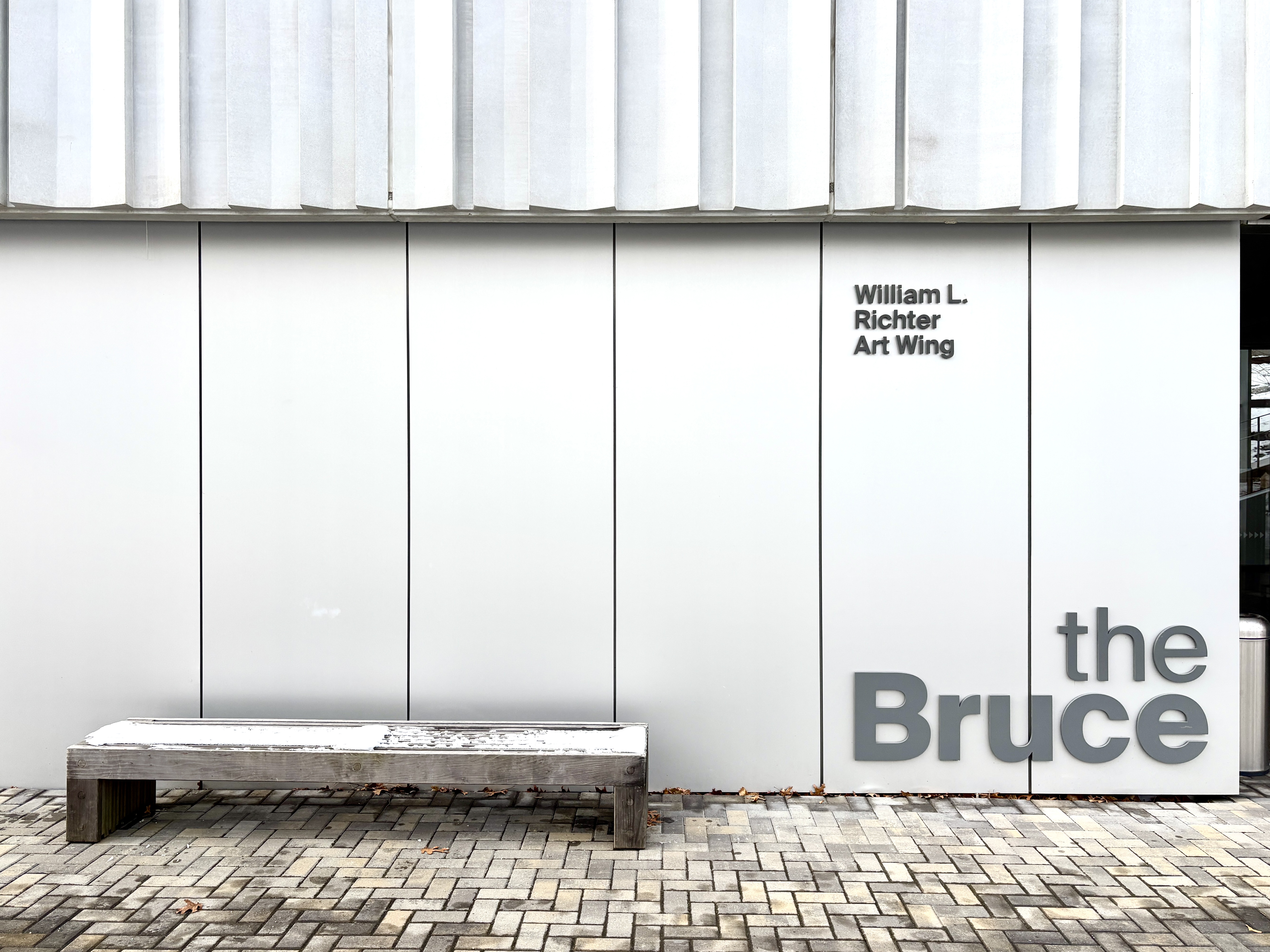
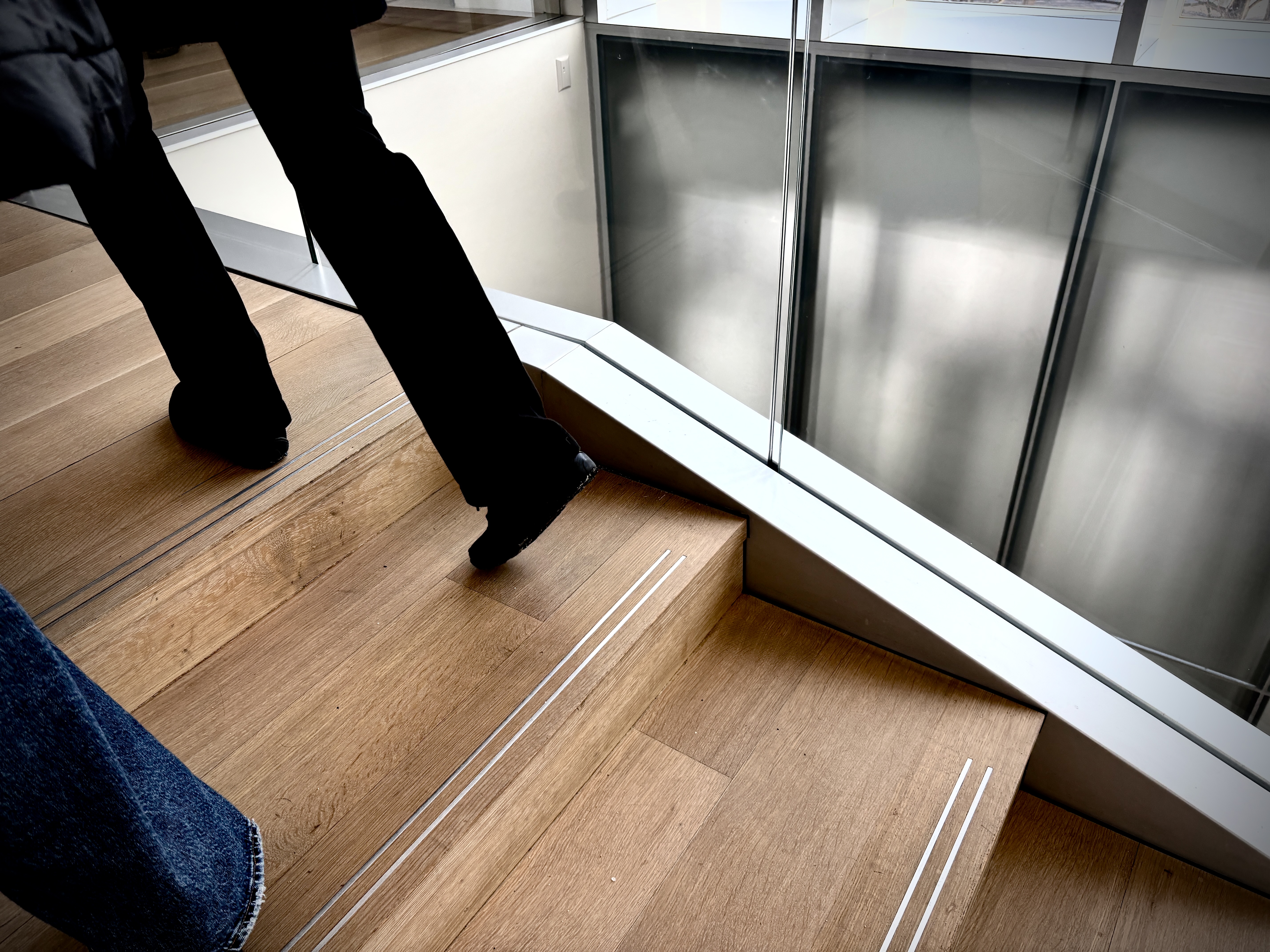
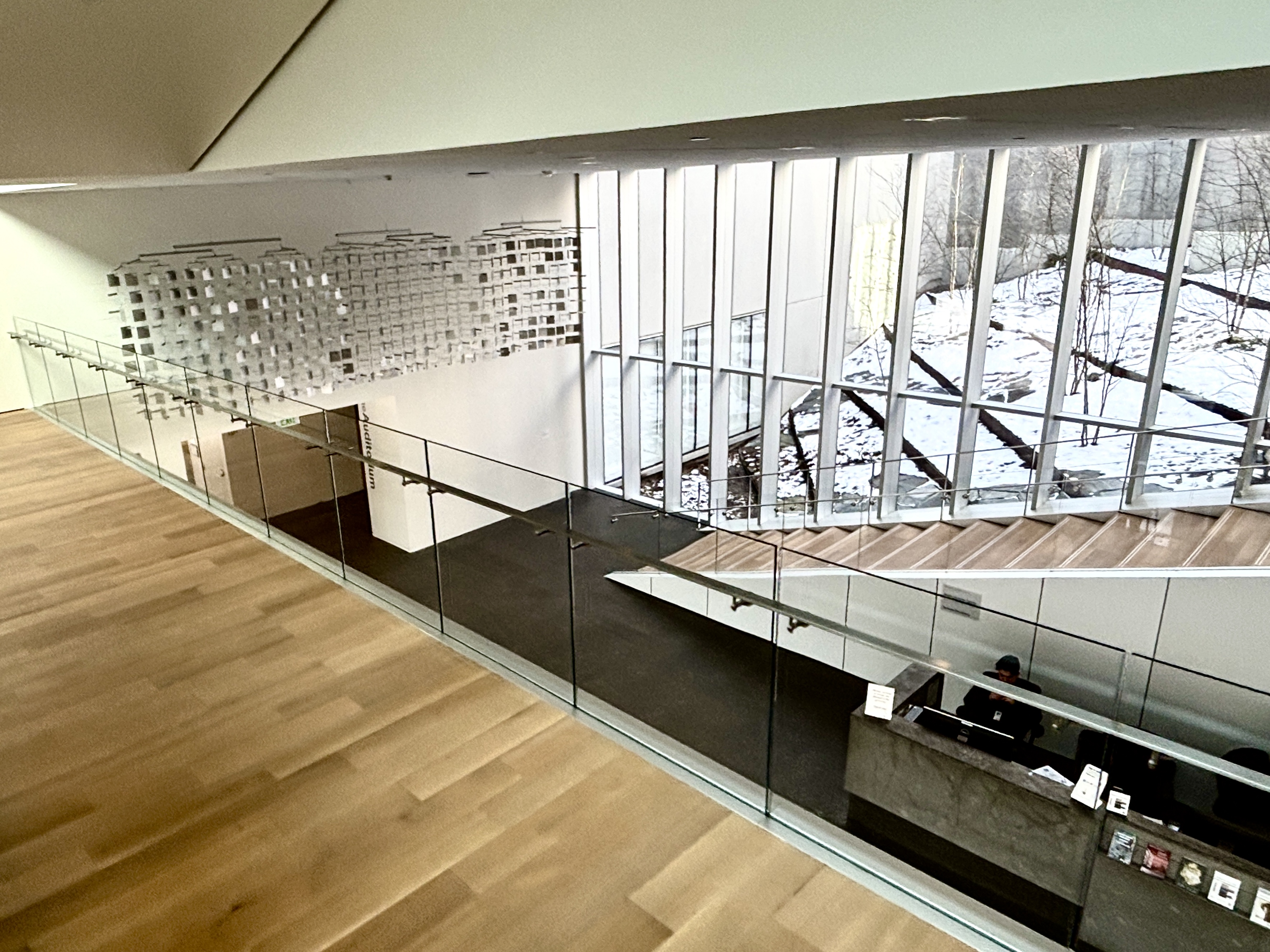
This morning I joined a guided tour at The Bruce Museum in Greenwich (as part of the Cornell Club of Fairfield – thank you Ching D’Arminio!). As an architect working in Fairfield County, I’ve driven past the Bruce countless times, but walking through with a guide revealed things I would have missed on my own.
The Bruce holds an interesting place in our area. Once a private home, it has grown into a museum that bridges two different worlds: fine art and science/natural history. The recent addition, the William L. Richter Art Wing finished in 2023, uses a quiet modern style with white panels and subtle vertical lines that feels both fresh and fitting for the park setting.
The Art Wing
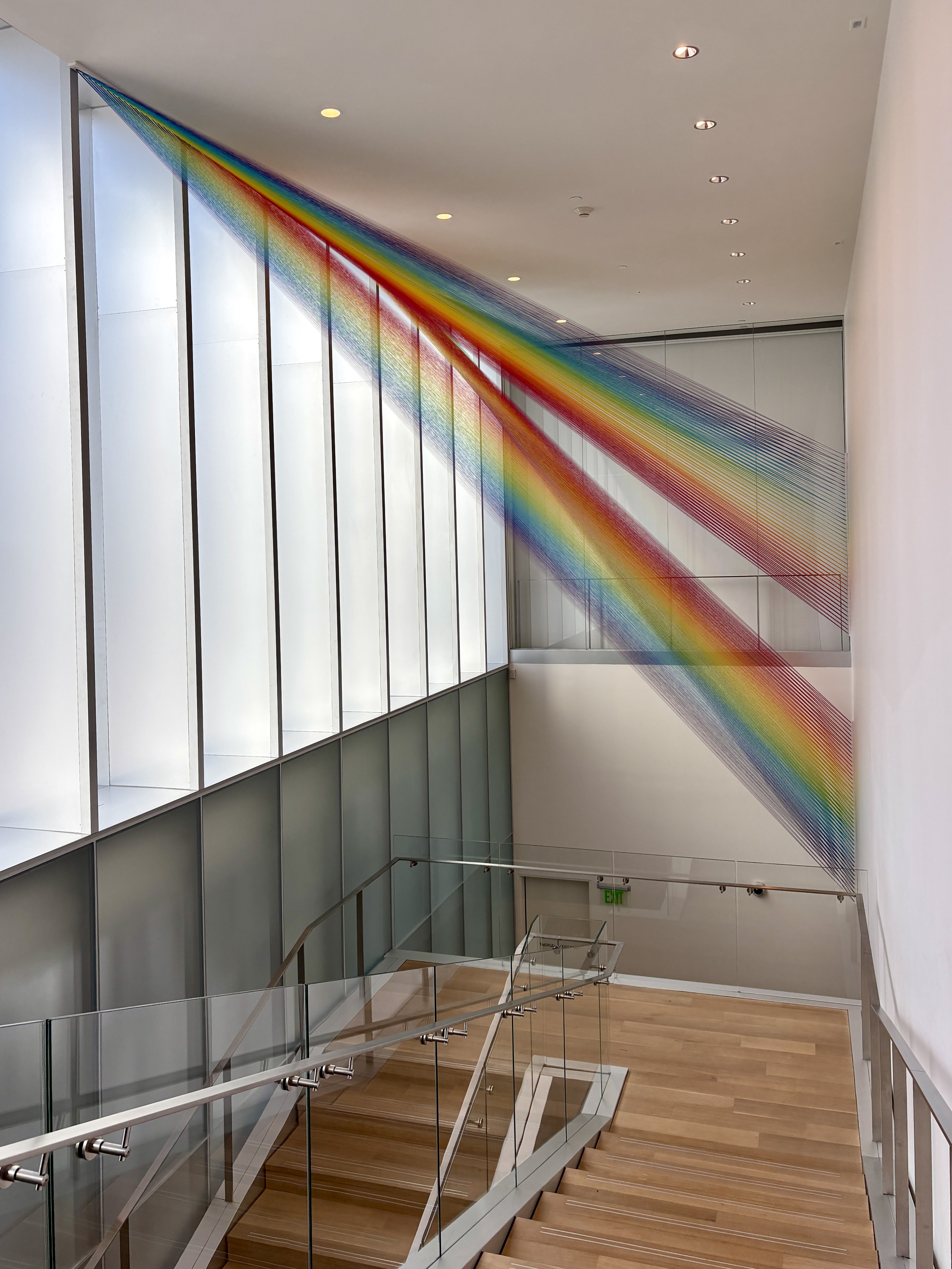
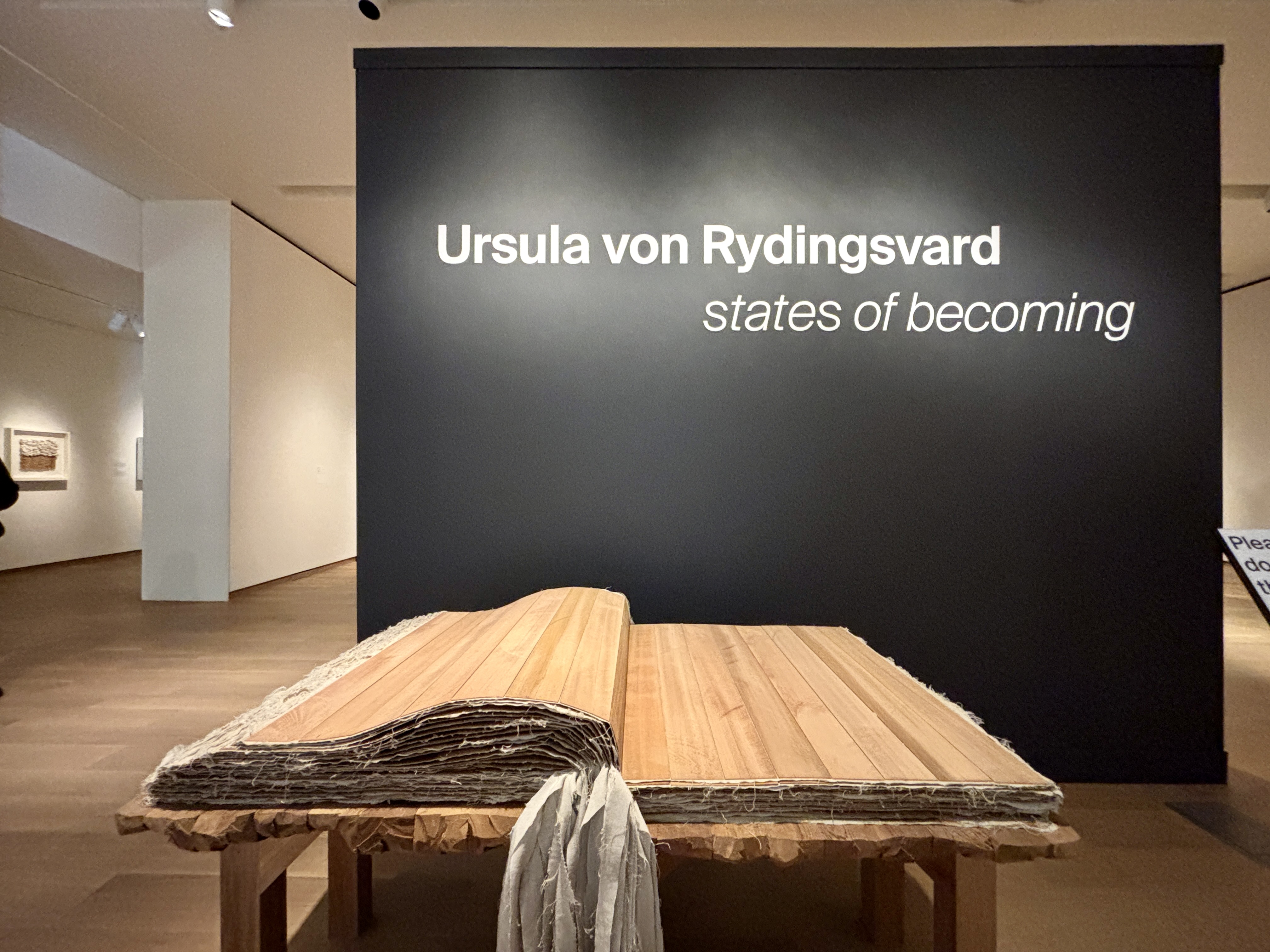
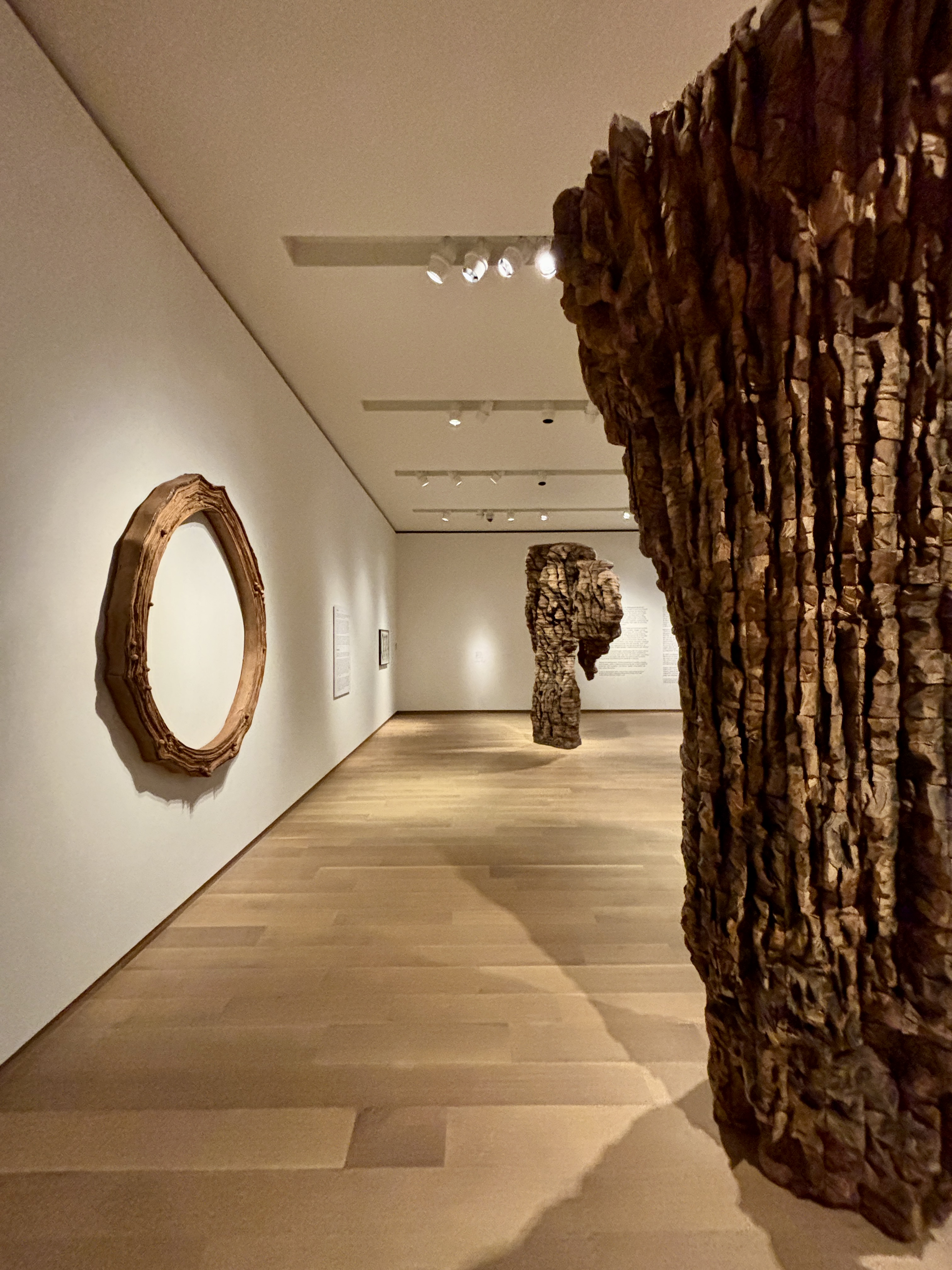
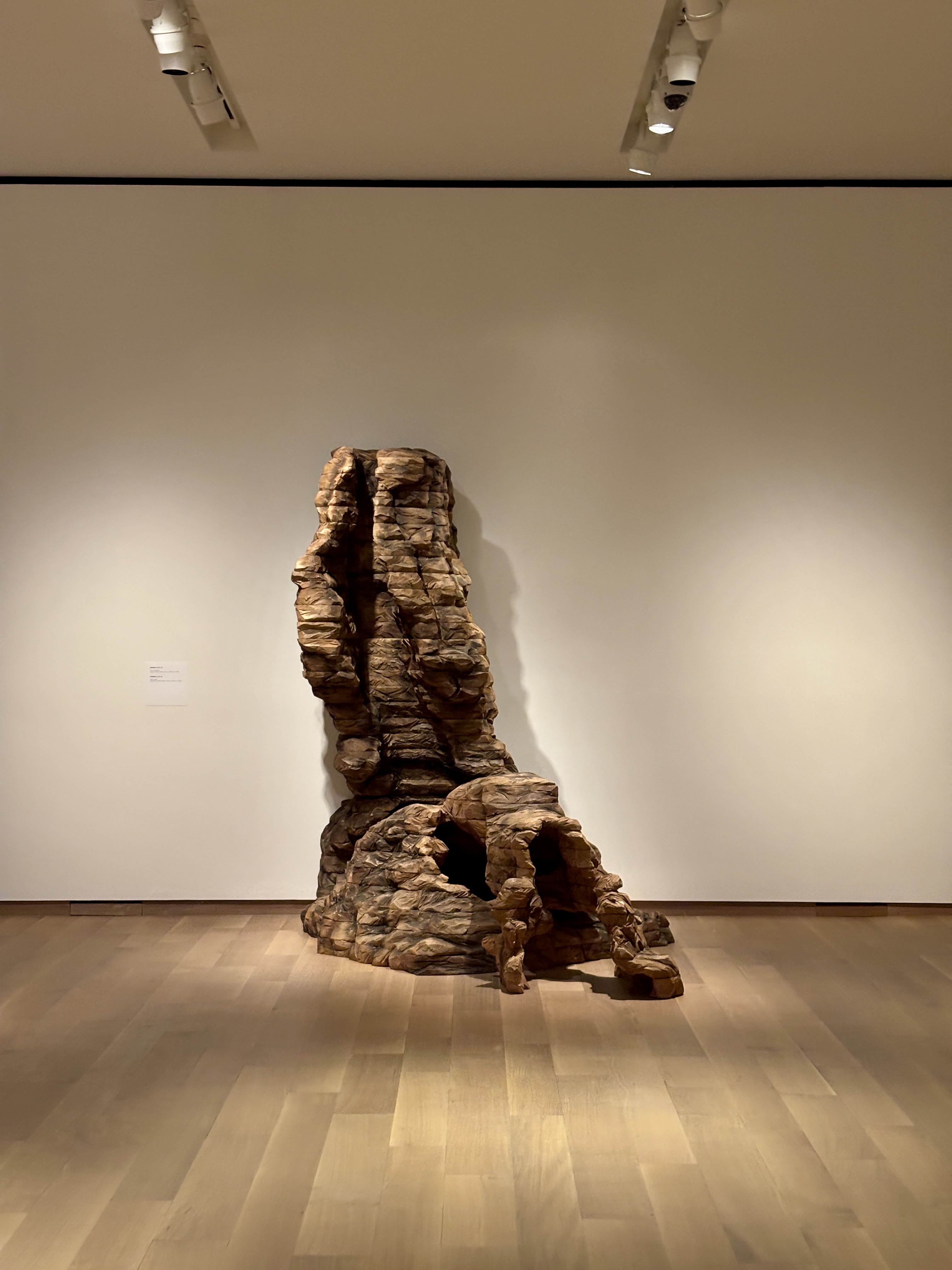
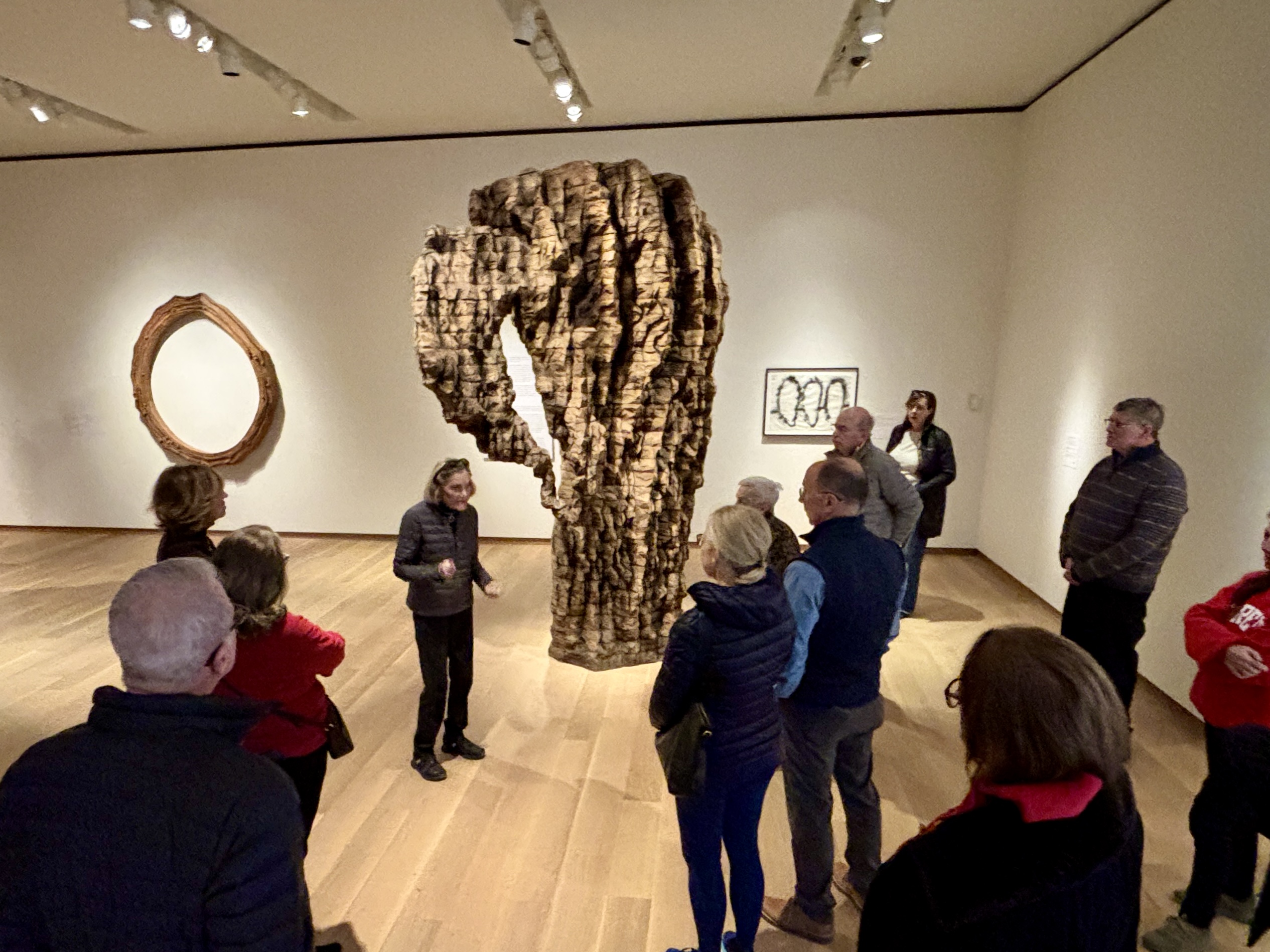
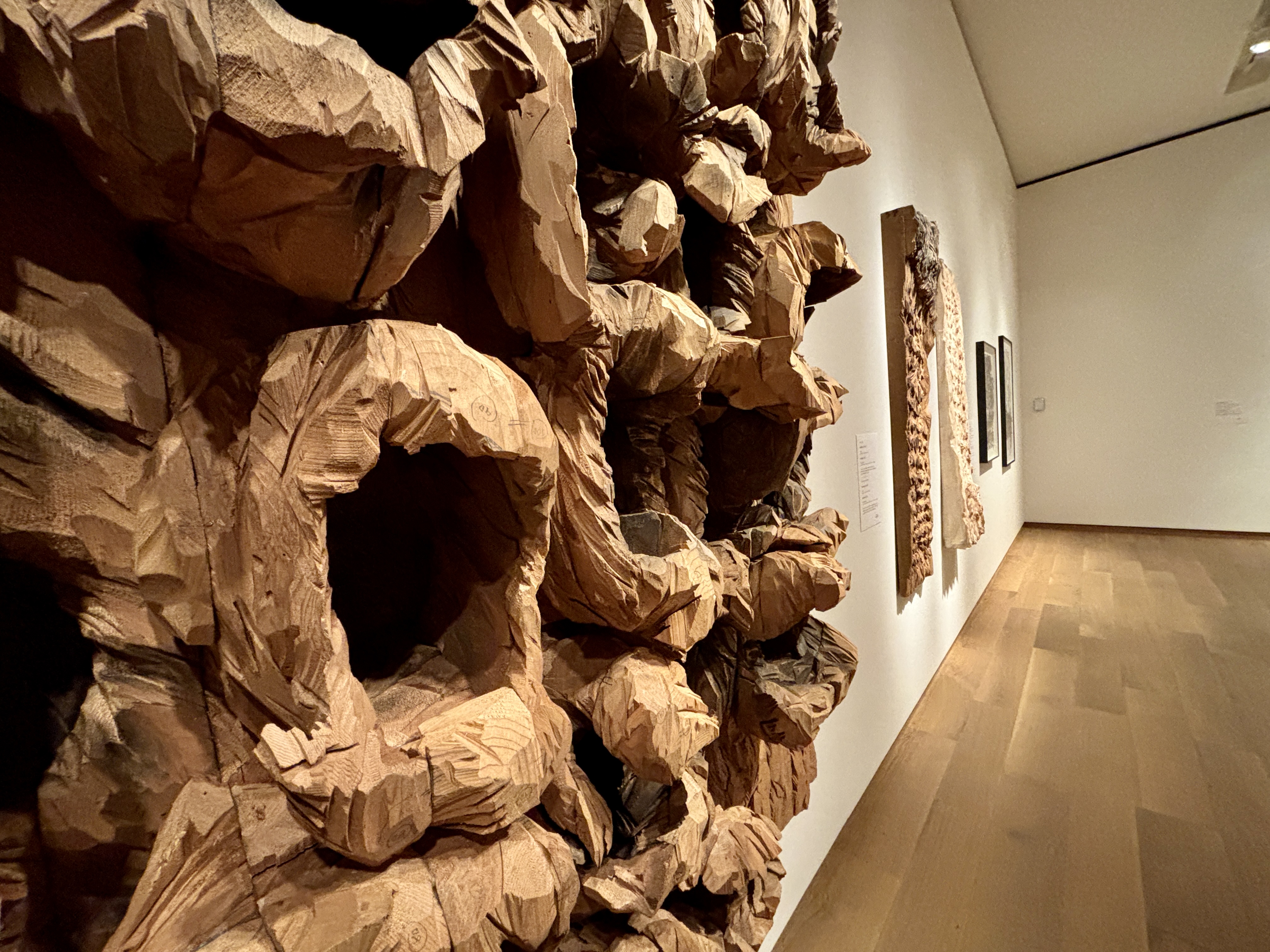
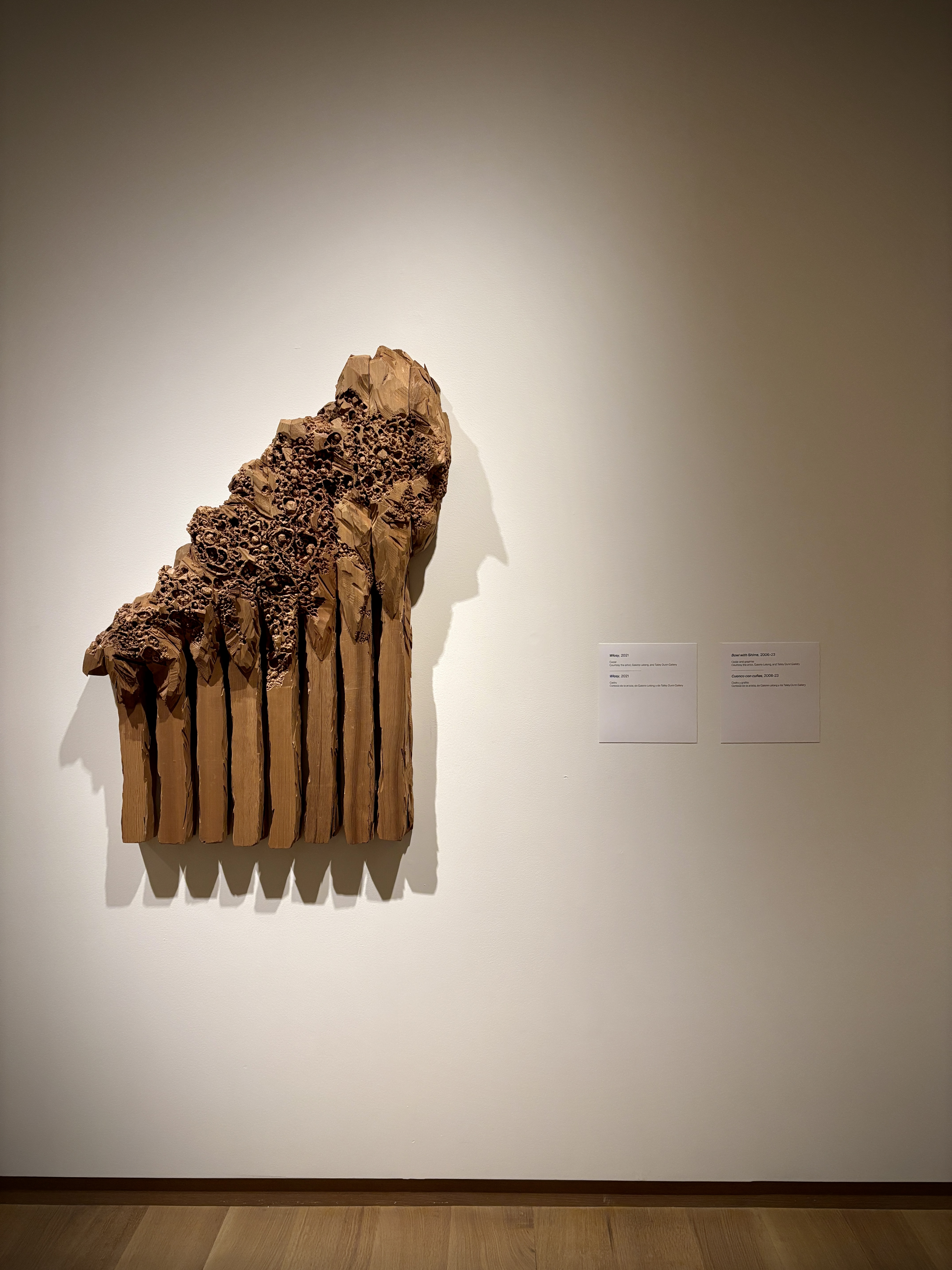
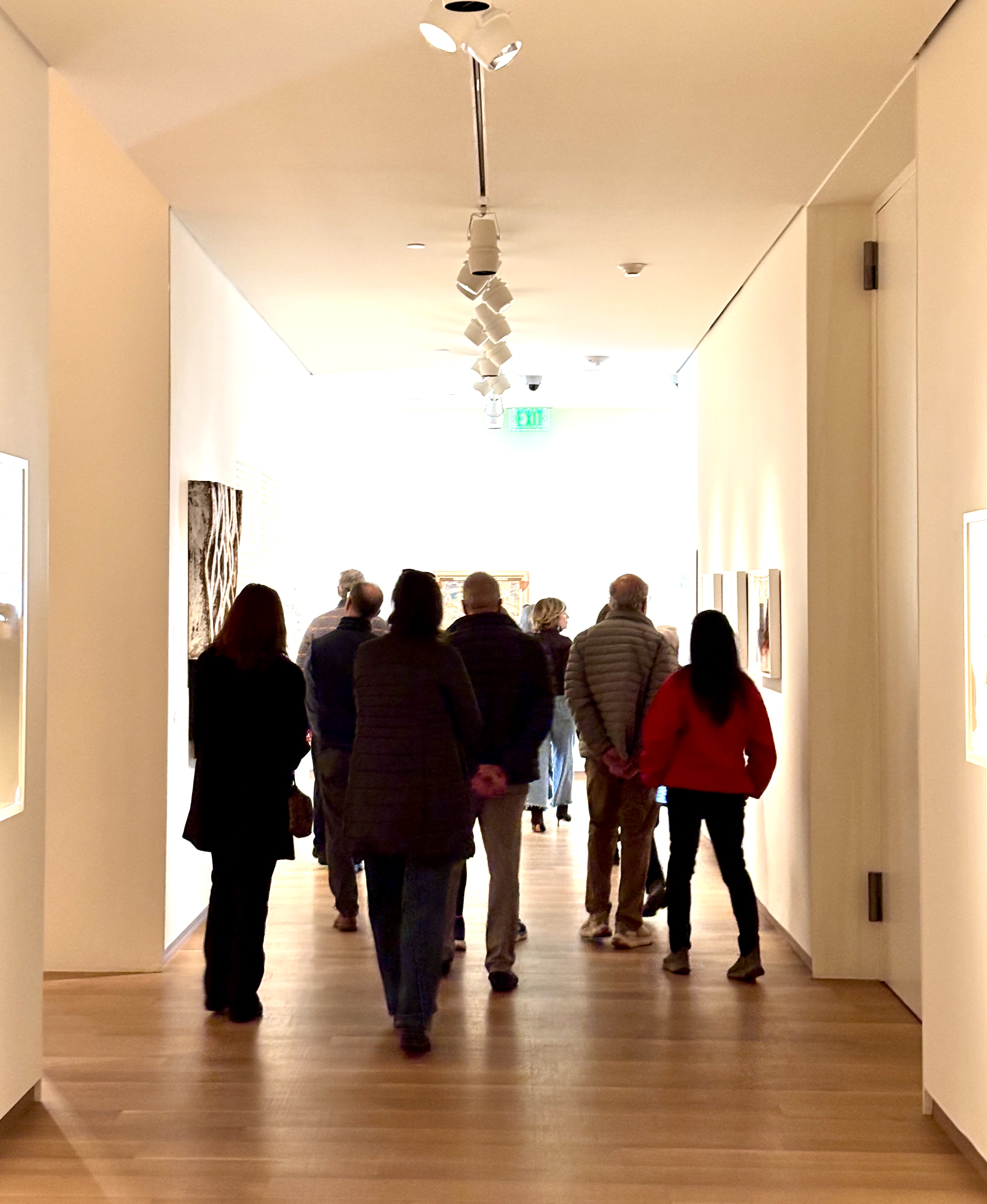
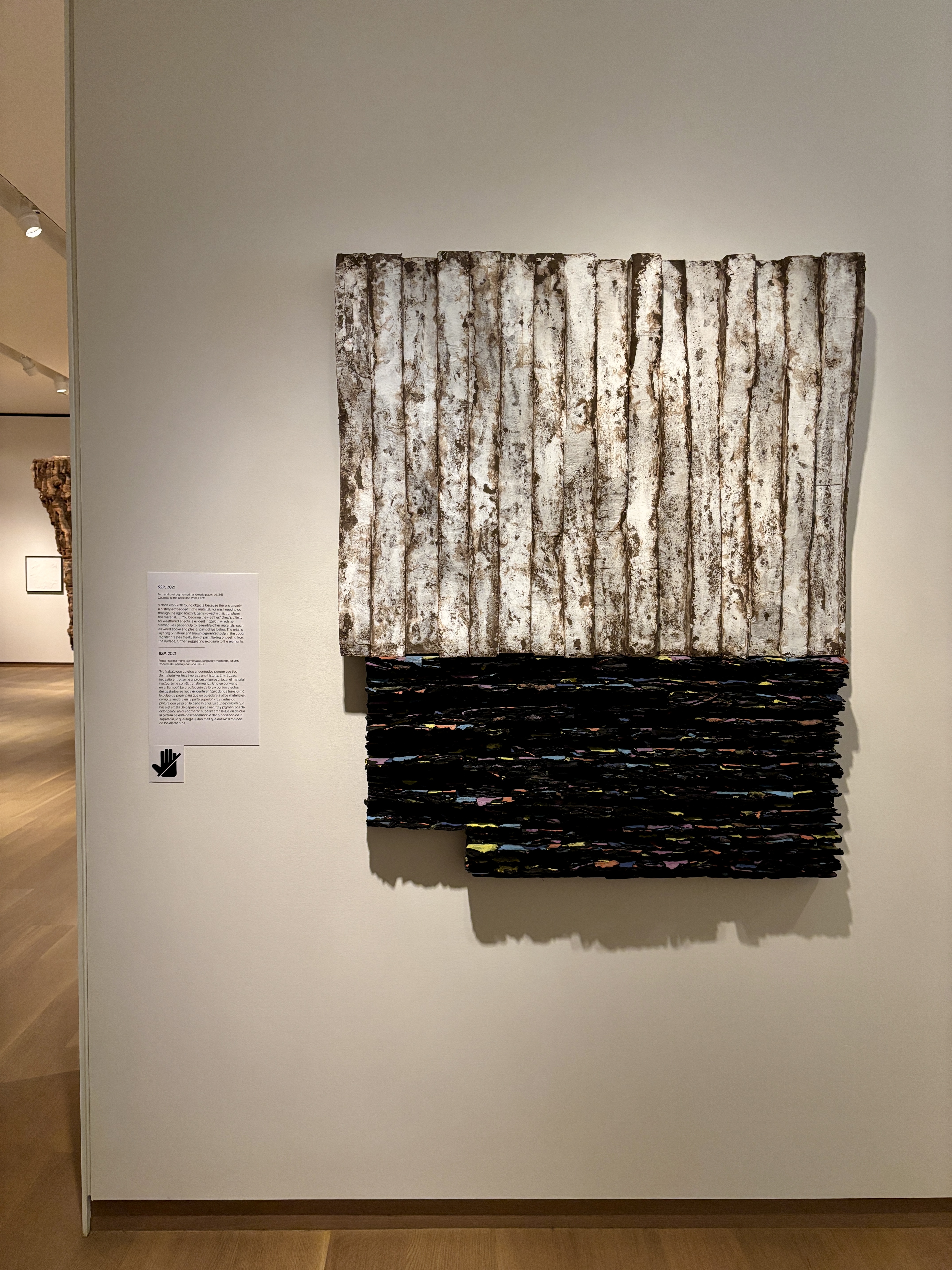
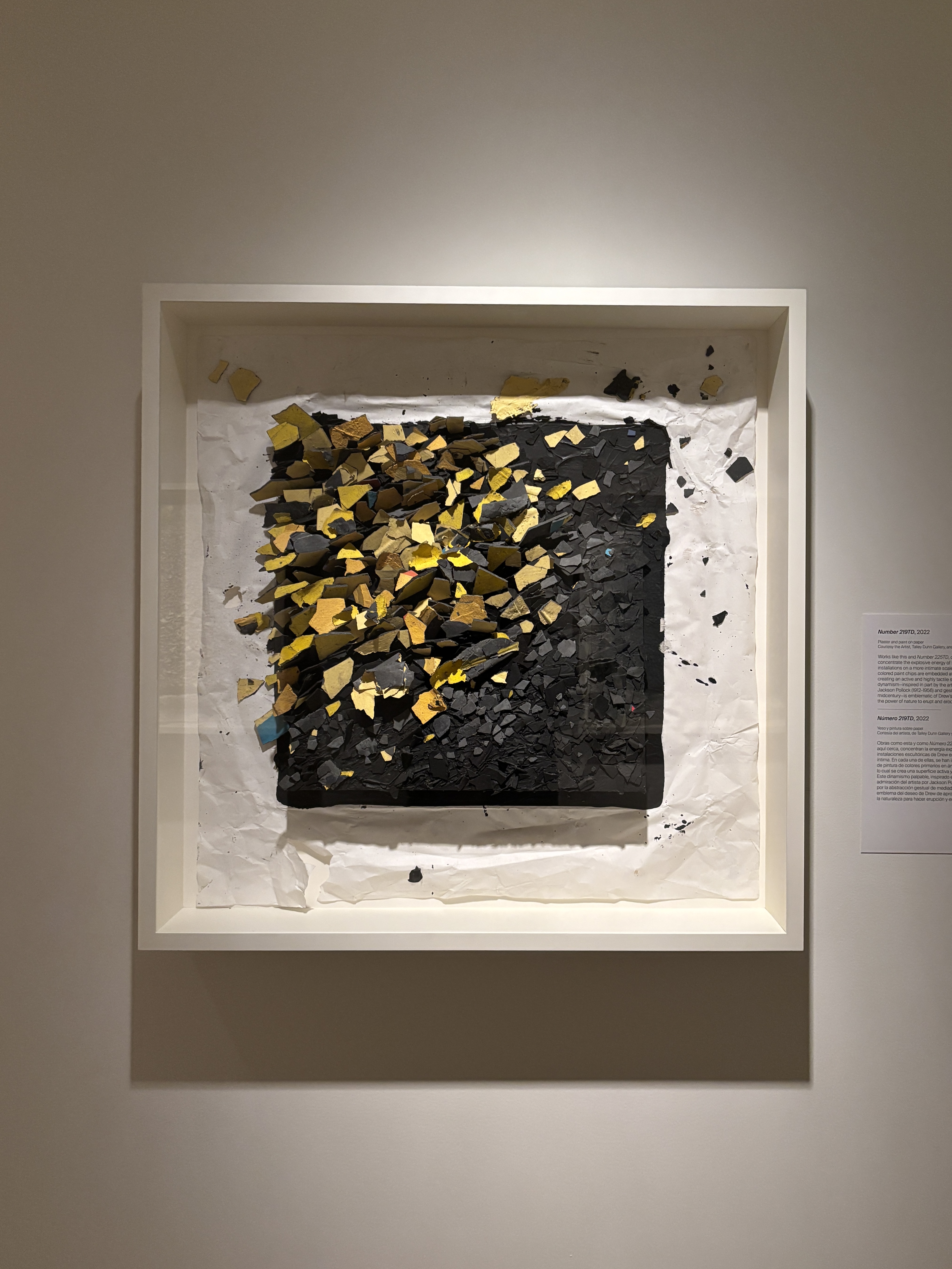
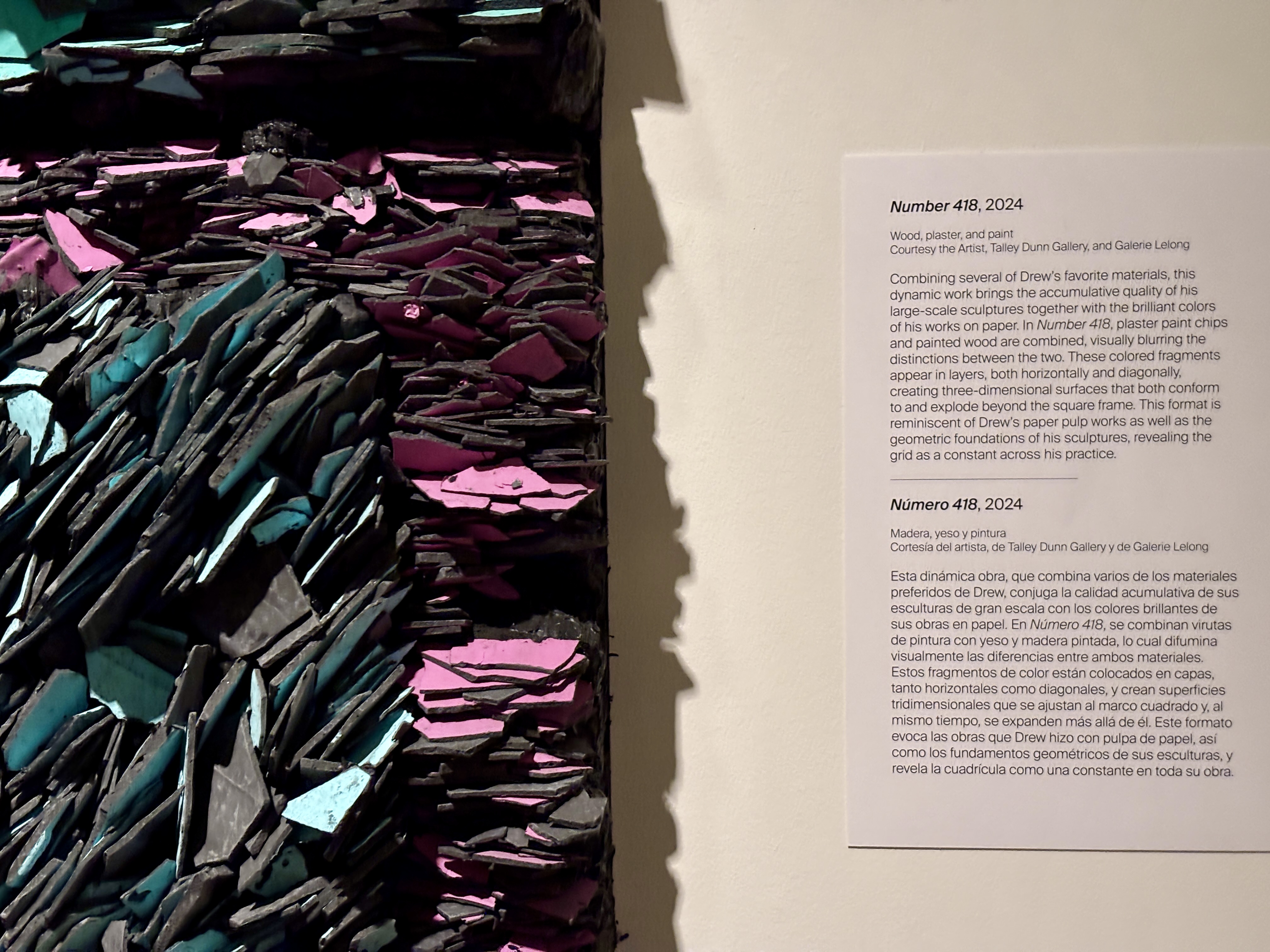
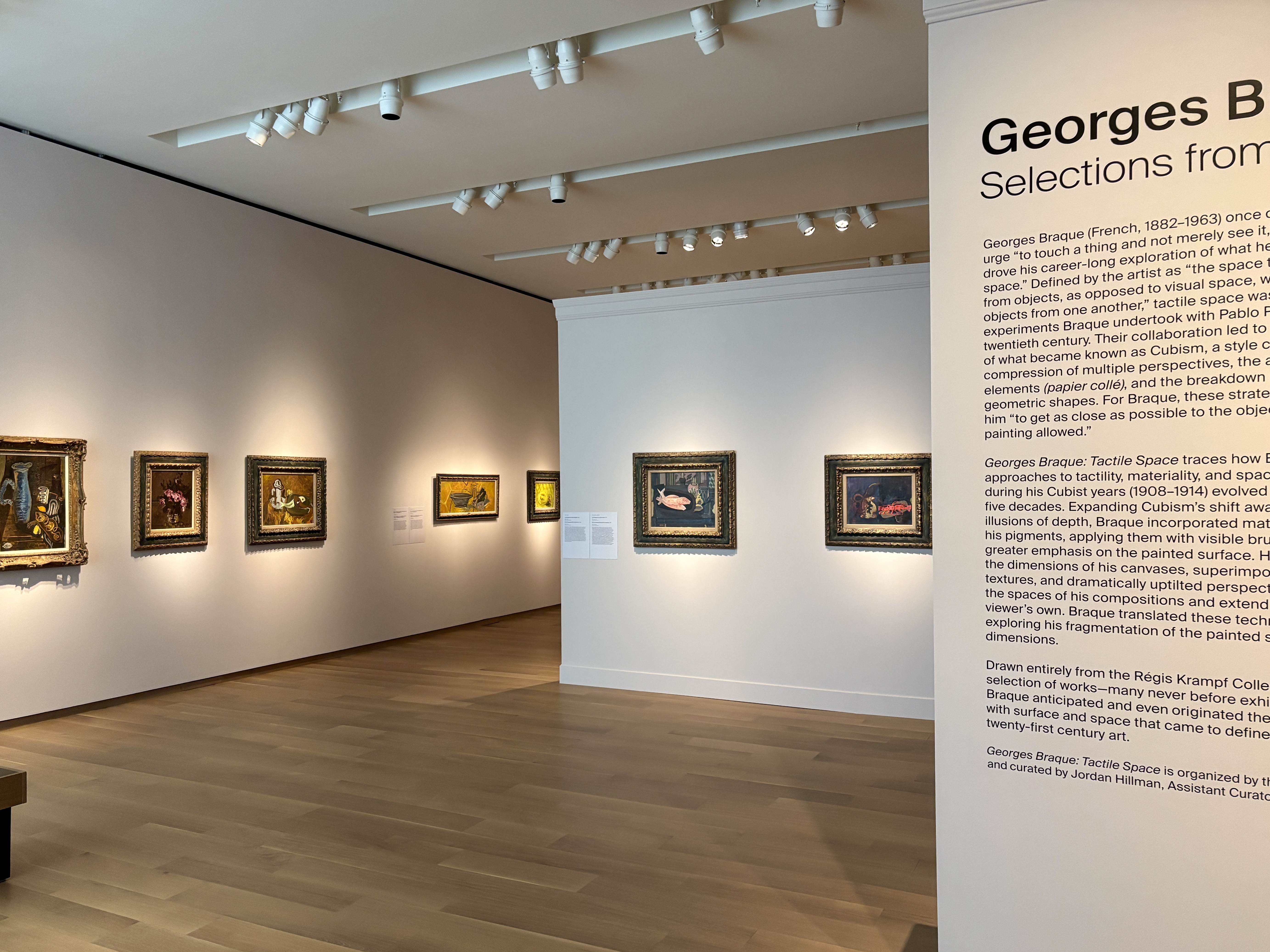
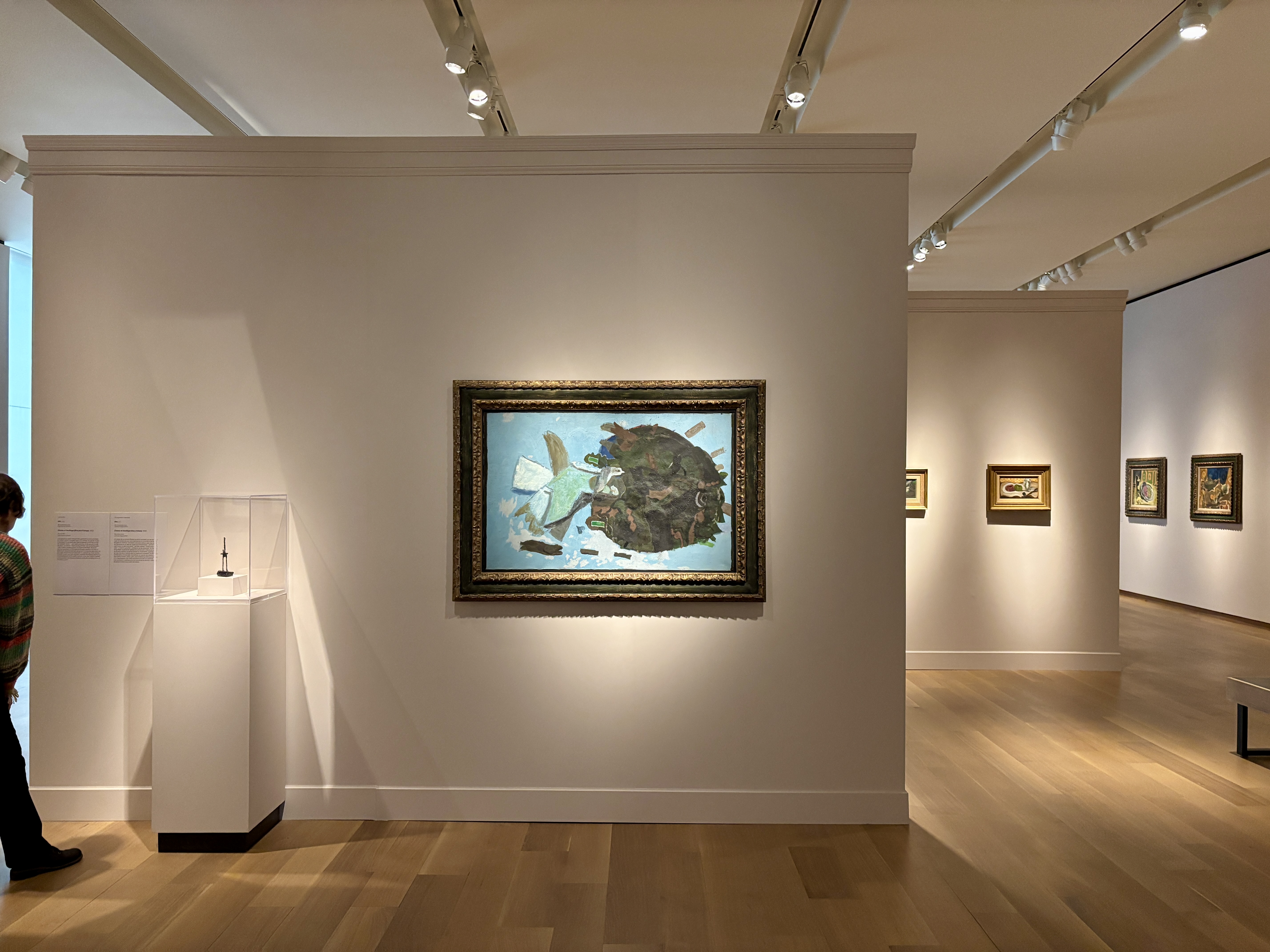
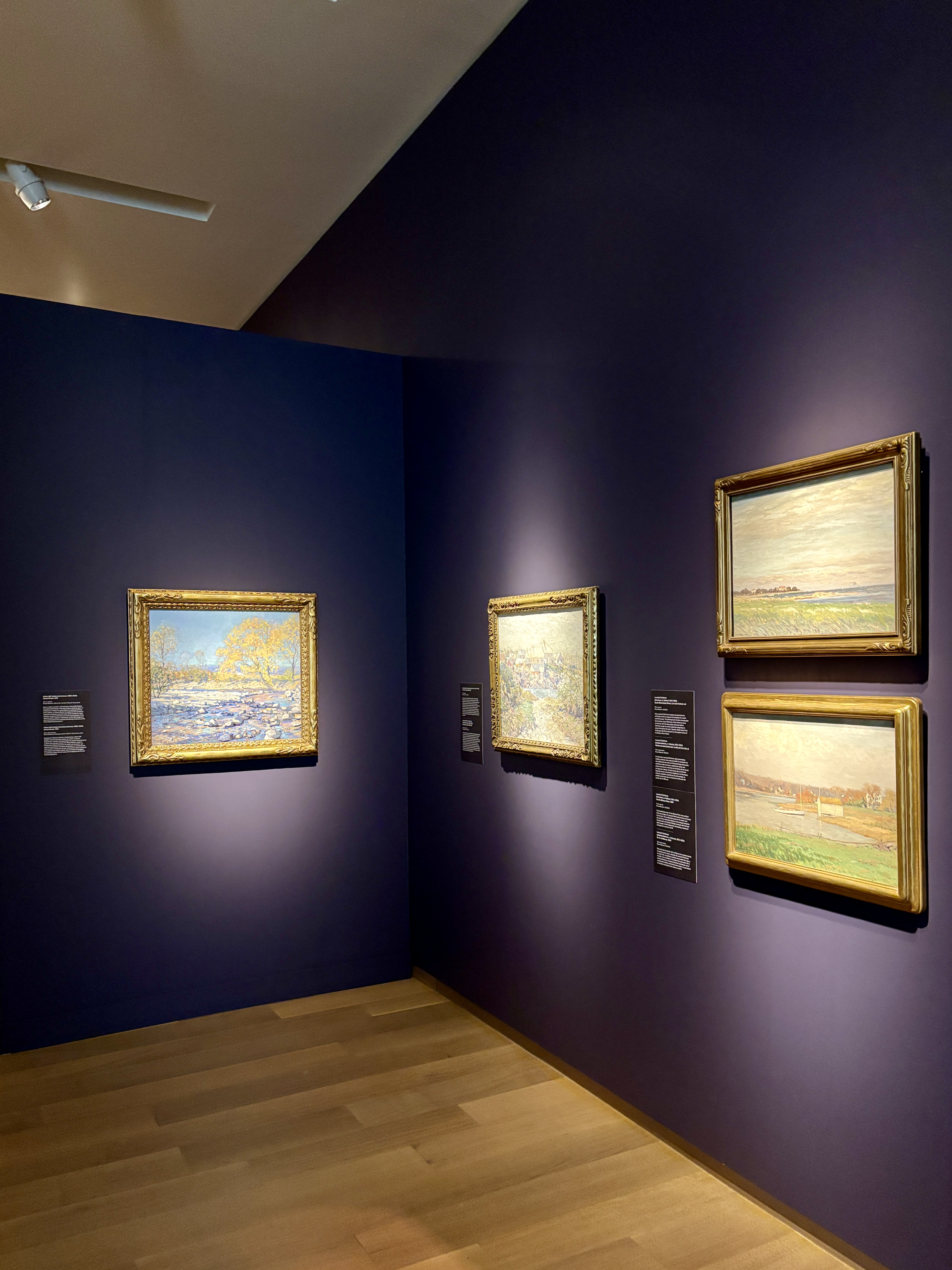
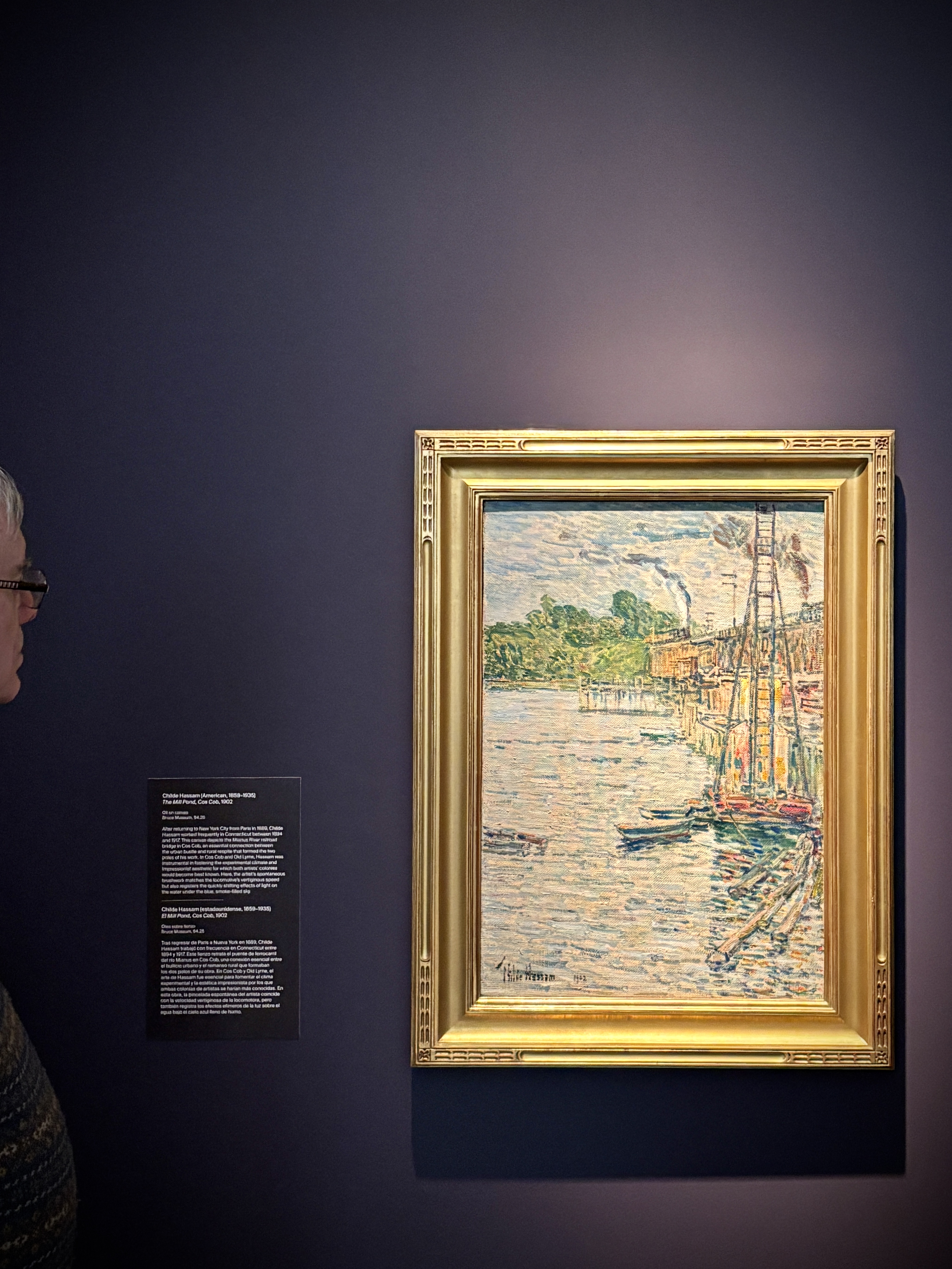
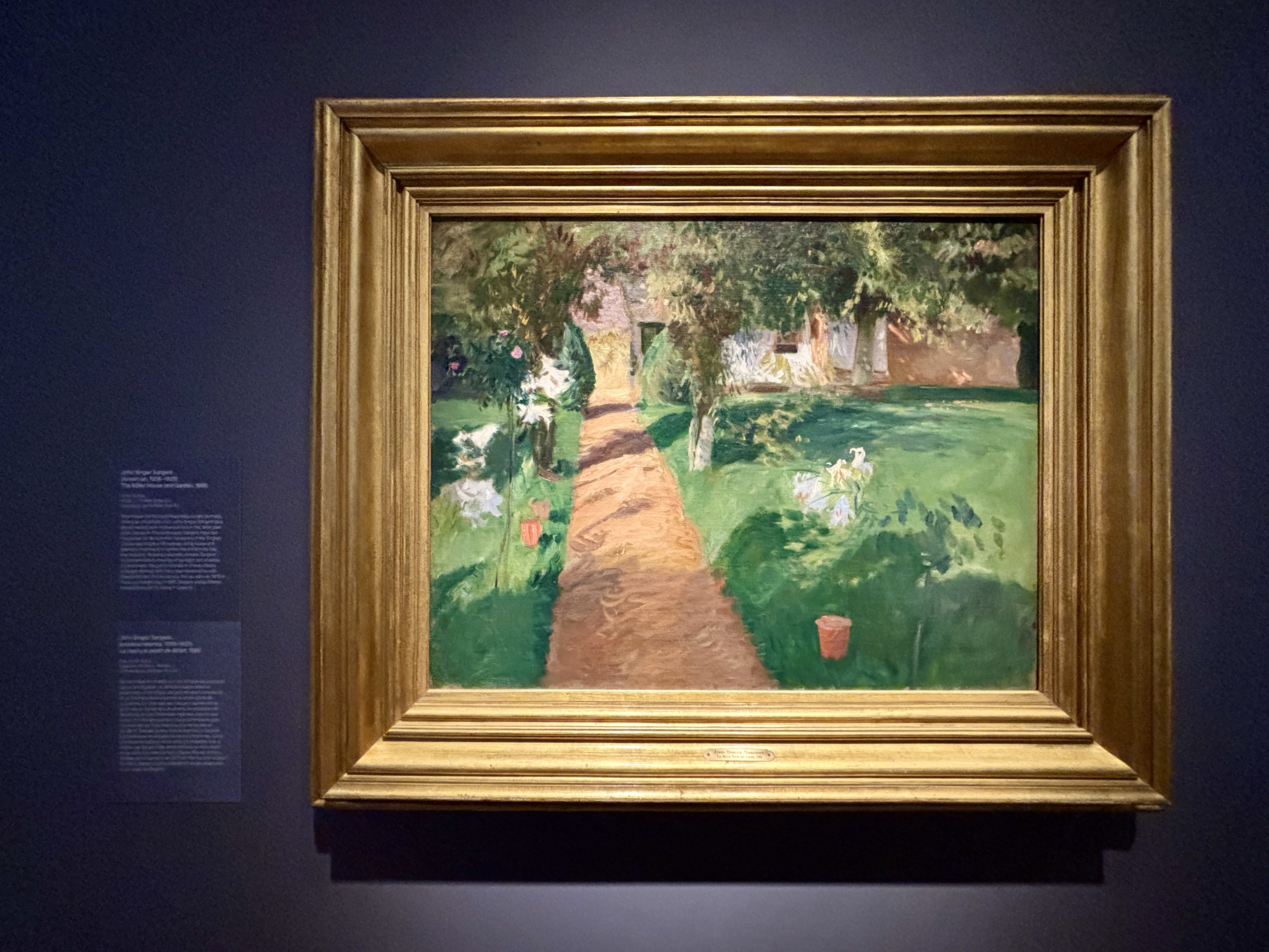
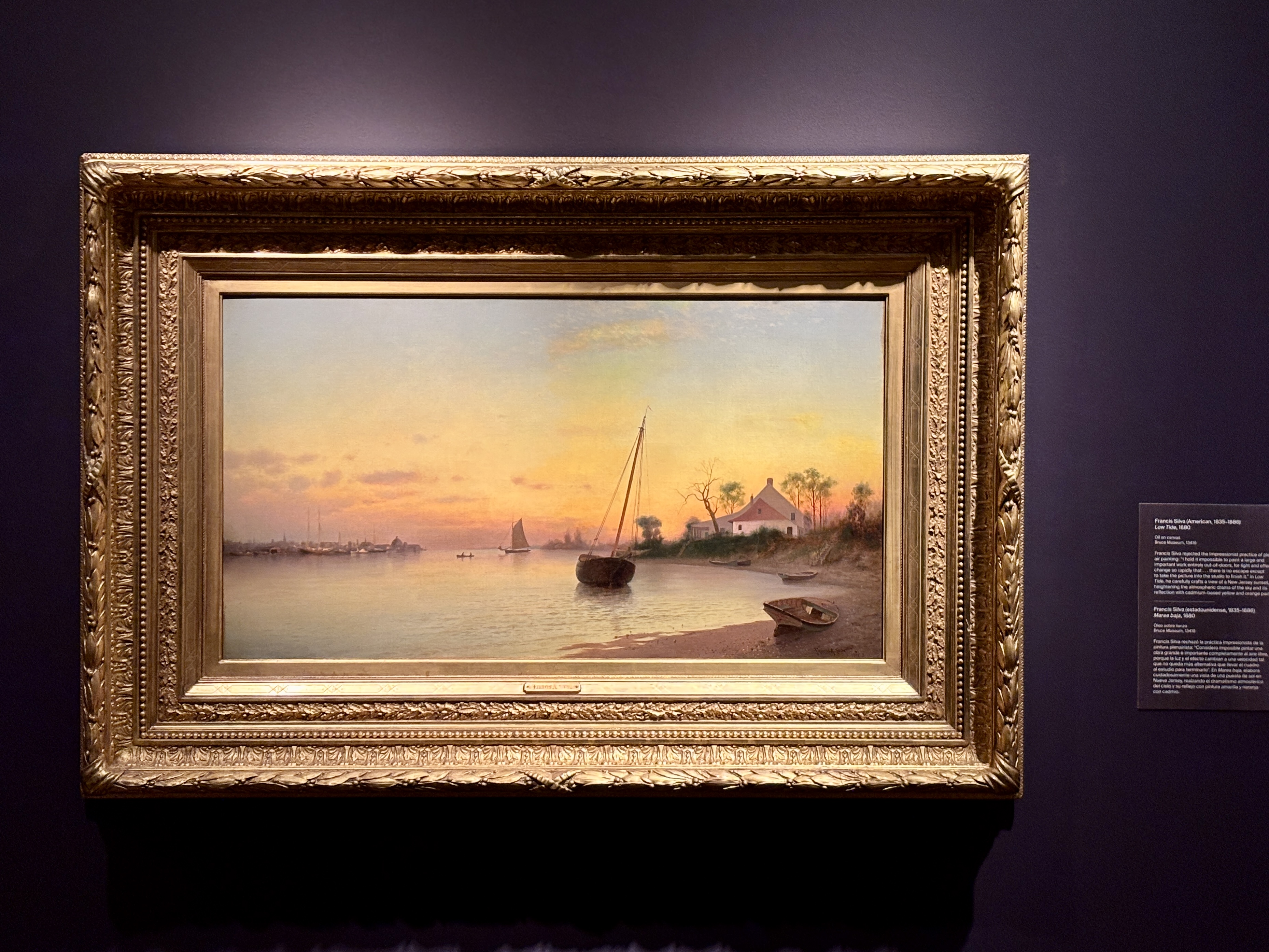
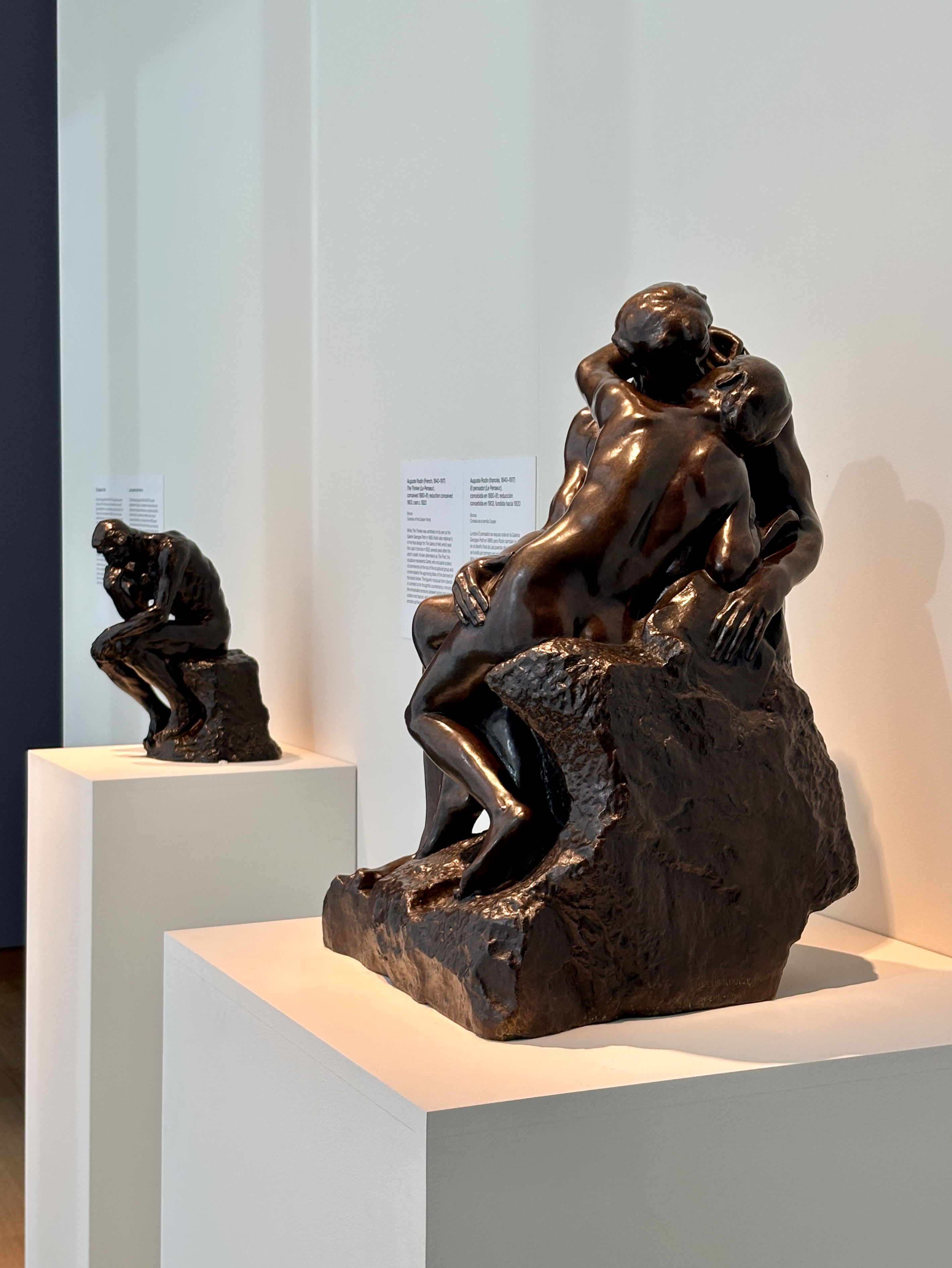
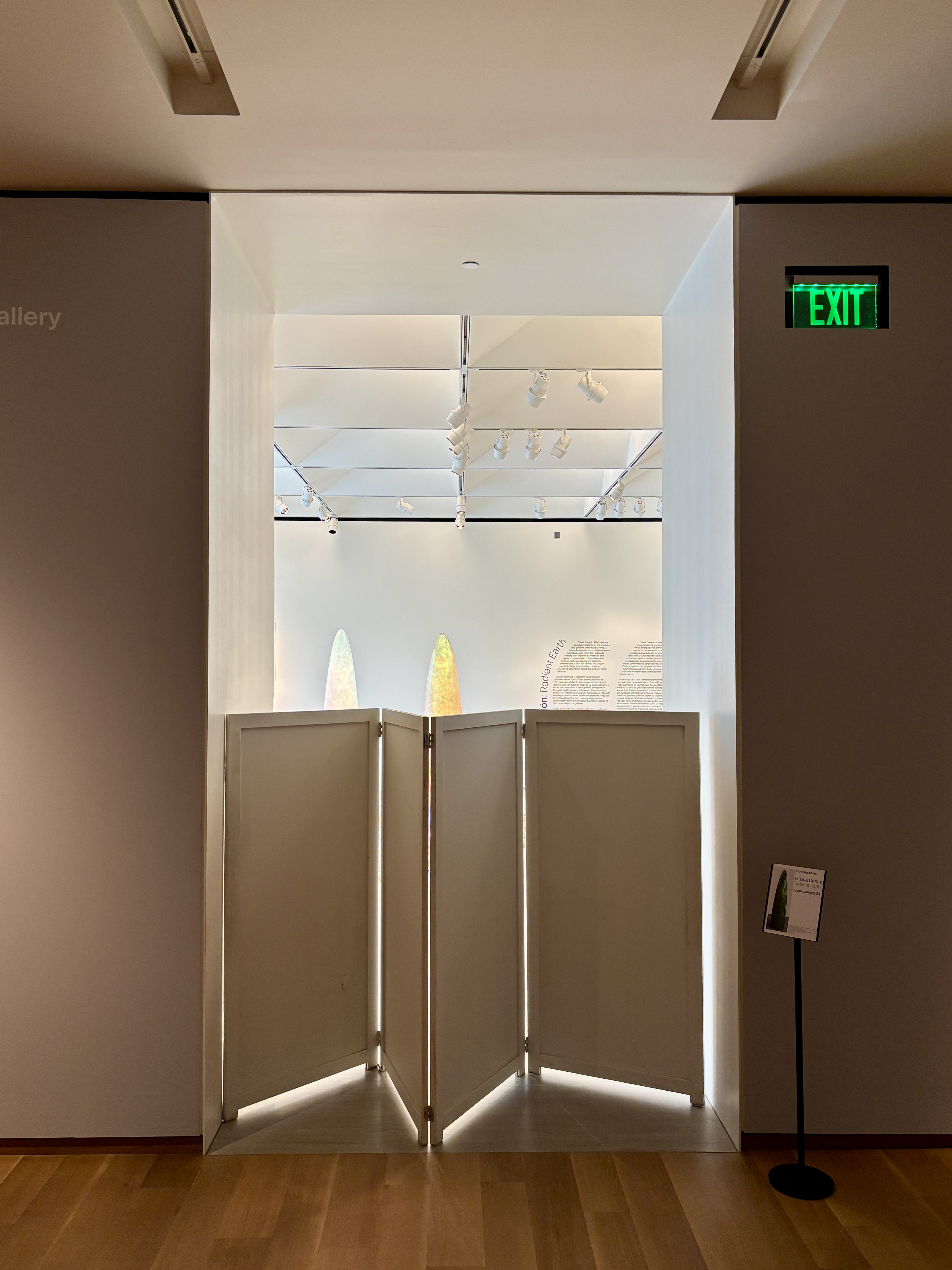
While I’d been to the Bruce many years ago, the new Richter Art Wing feels like a different place entirely. Designed by Steve Dumez of Eskew Dumez Ripple (Their portfolio entry on in it is beautiful, too), the galleries have generous ceiling heights and careful lighting that make the artwork shine. Oak floors, white walls, and a restrained track system create an ideal viewing space.
American paintings from the 1800s and early 1900s filled several rooms. A group of Impressionist landscapes hung on deep purple walls, the bold color making the golden frames and sunny scenes pop. The Bruce Museum’s art collection has a strong emphasis on the Cos Cob School, an Impressionist school, and the Cos Cob Art Colony played a major role in the development of American art. Francis Silva’s “Low Tide” from 1880 captured that evening light on Long Island Sound that anyone on the Connecticut coast will recognize.
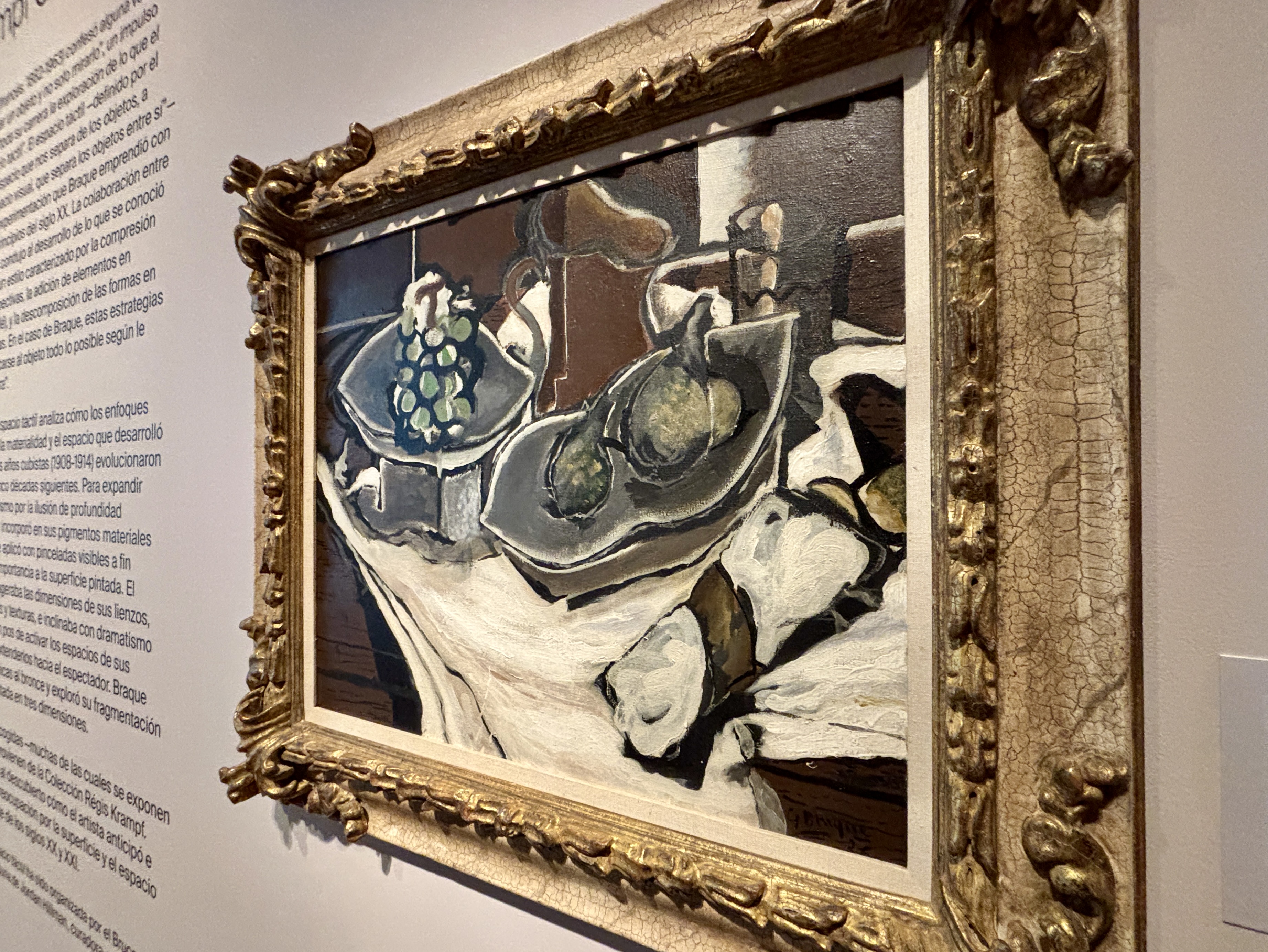
A special show of Georges Braque’s work, “Tactile Space,” filled several galleries. On view through August 2, 2026, the exhibition is organized by the Bruce Museum and curated by Jordan Hillman, assistant curator of art. It traces how Braque’s approach to surface and space evolved over five decades. One still life with grapes and drapery showed his subtle handling of form, while the ornate period frame created an interesting contrast with the modern painting inside.
The collection includes real treasures. Two Rodin bronzes, “The Thinker” and “The Kiss,” glowed in a corner gallery. Robert Indiana’s chrome LOVE sculpture gleamed where natural and artificial light mixed to create shifting reflections. A smaller gallery with burgundy walls showed selections from the permanent collection, with delicate works on paper featuring botanical and figurative imagery.
Science & Natural History
Natural History
The tour continued into the natural history wing. A large display mapping Connecticut’s bedrock caught my eye, dividing the state into Western Uplands, Central Lowlands, and Eastern Uplands. These rock types affect everything from foundations to drainage, topics that come up often in my own work on residential projects.
The Dinosaur Gallery
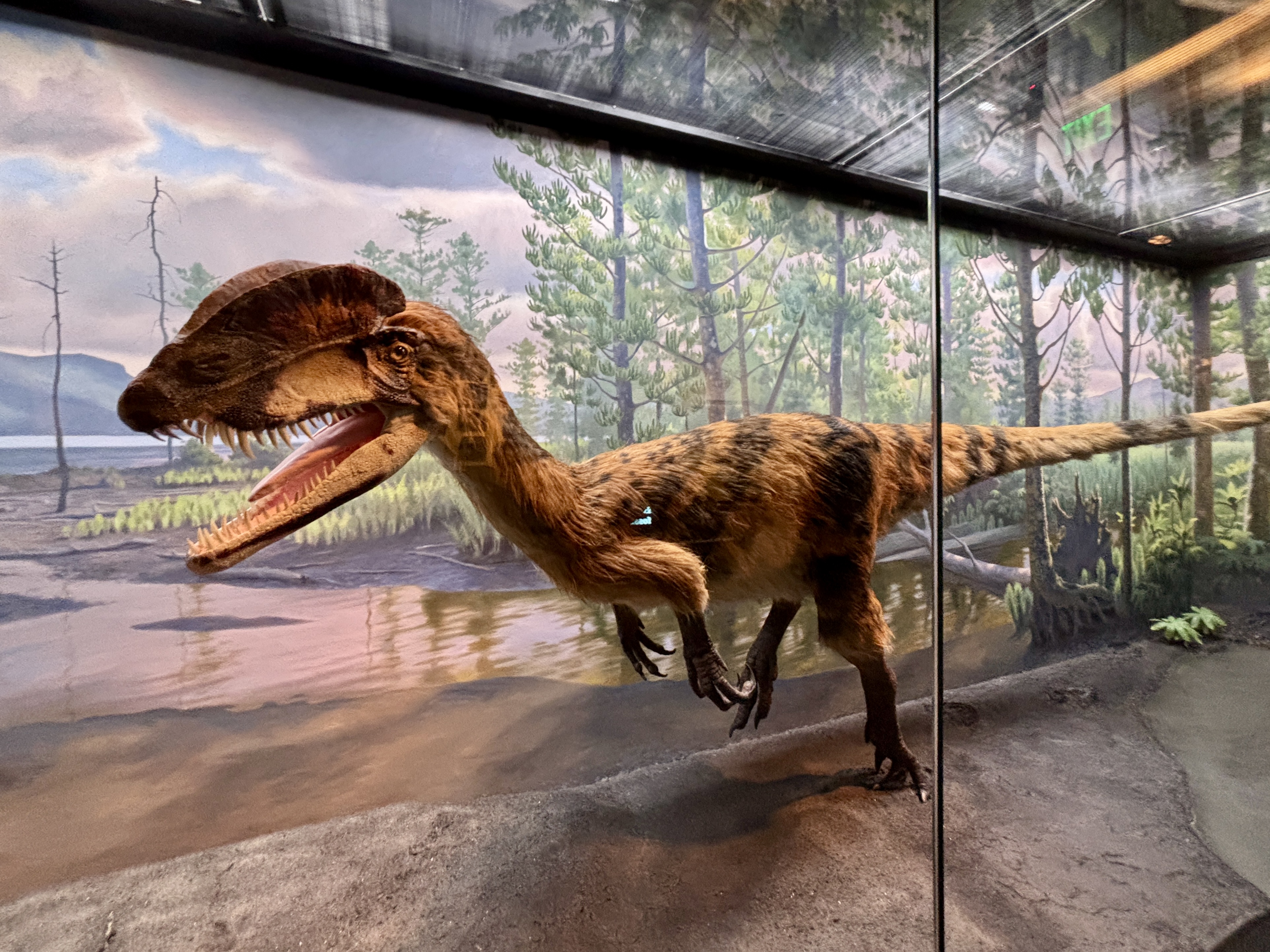
The Bruce has a striking feathered dinosaur model, likely a dilophosaurus based on its head crests. The reconstruction shows proto-feathers rather than scales, reflecting current science. It’s a reminder of how fast our understanding changes.
The Ant Show
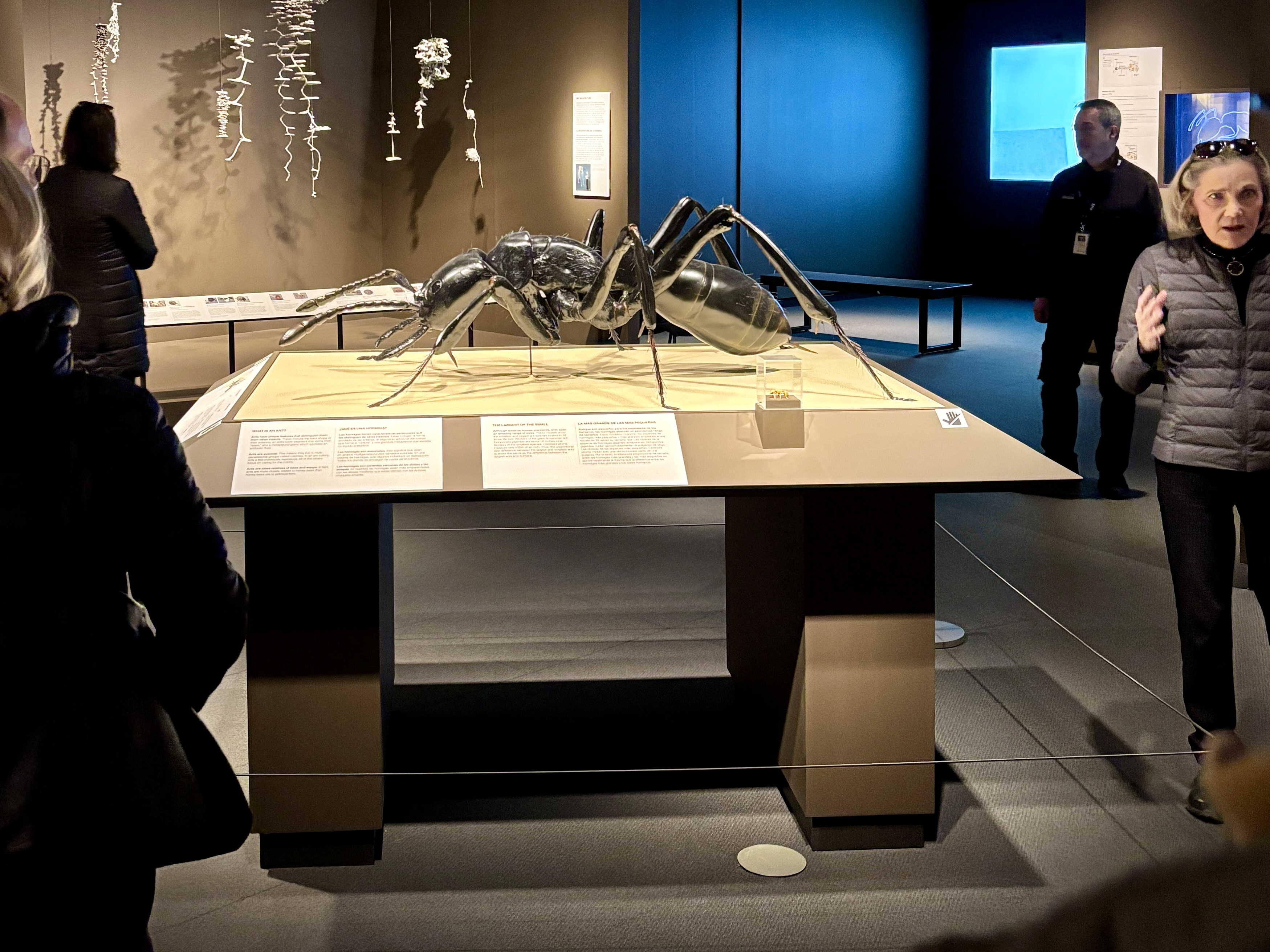
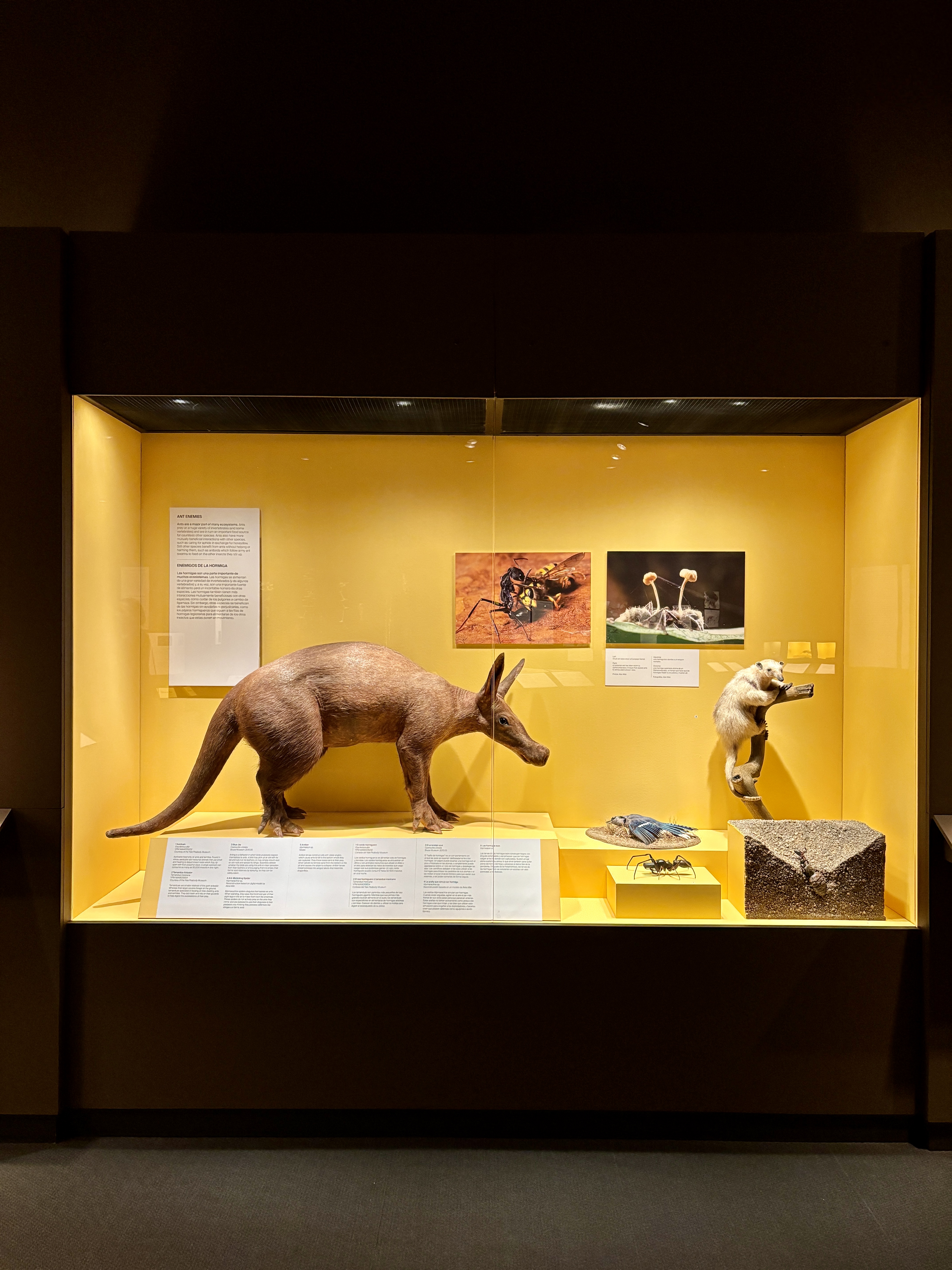
A temporary exhibit on ants was an unexpected highlight. “Ants: Tiny Creatures, Big Lives” is on view through May 17, 2026. The centerpiece, a five-foot-long model of an Amazonian ant, drew visitors of all ages. Hanging nearby, aluminum casts of actual ant tunnels created an almost dreamlike display. One case, backed in bright yellow, showed ant predators: an aardvark, a small primate, and enlarged ant models. The design balanced learning with visual punch, and that yellow backdrop was inspired.
The Dioramas
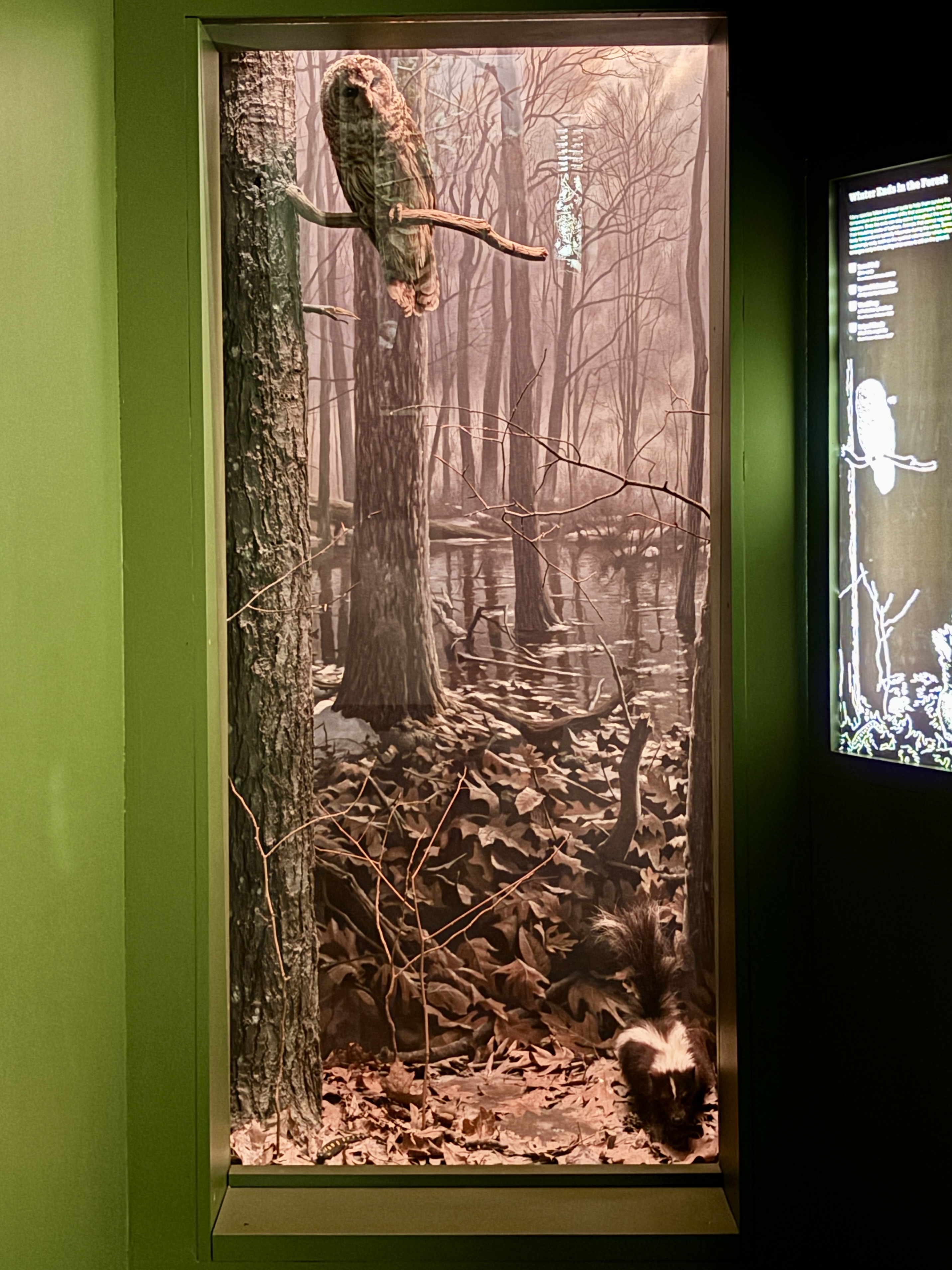
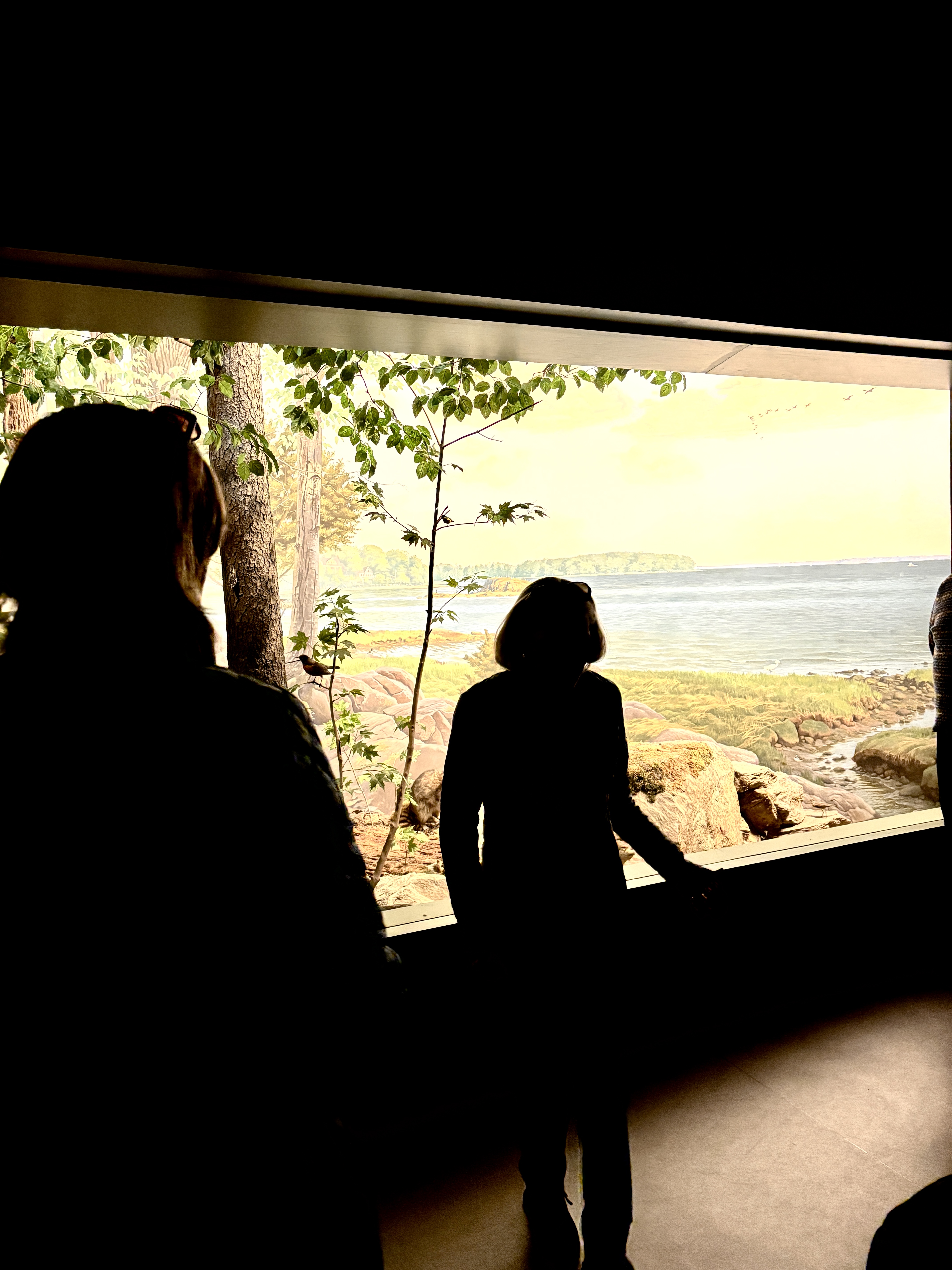
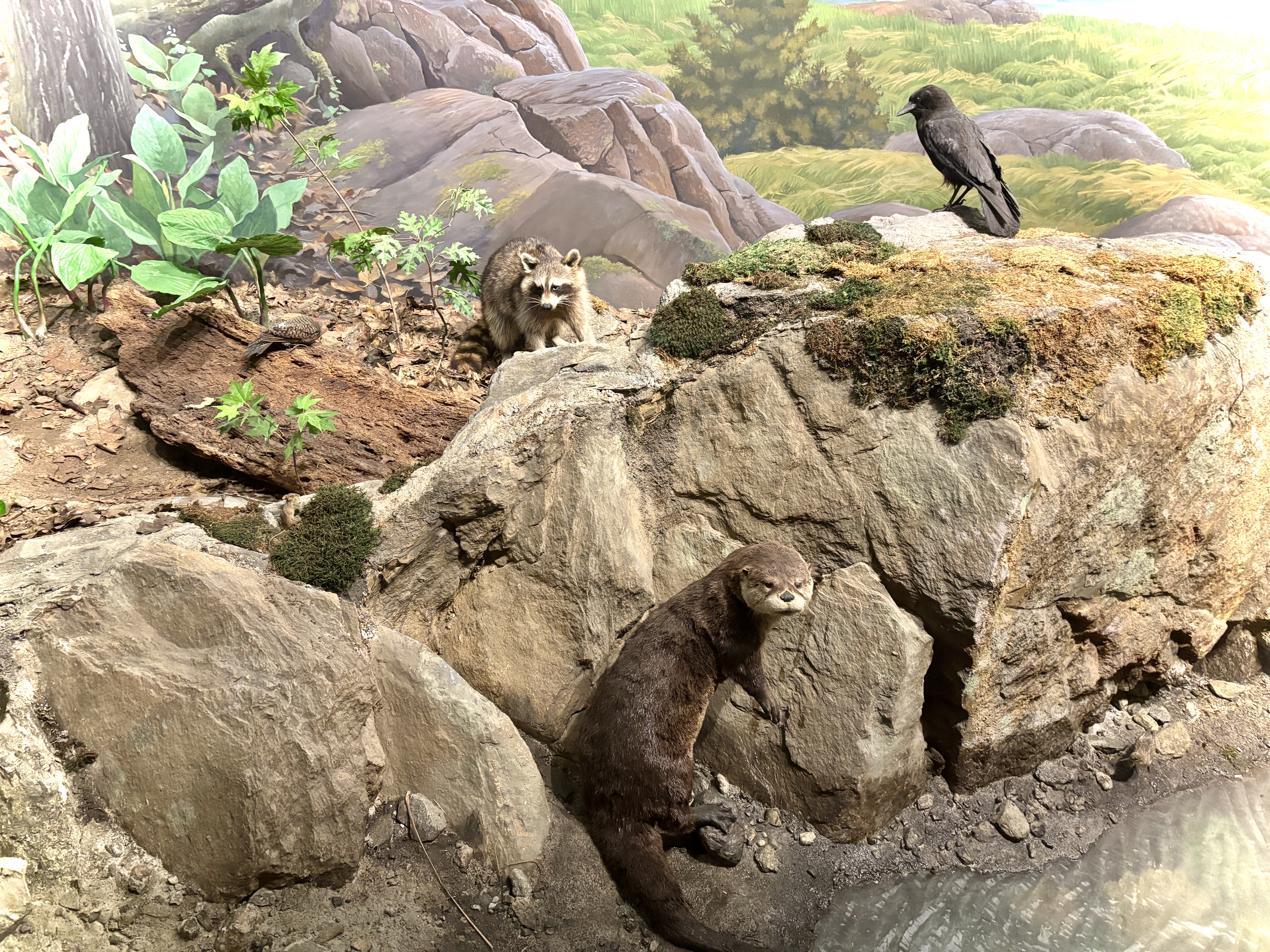
The diorama galleries brought back childhood museum memories. One showed a barred owl in a winter wetland with a skunk below. Another placed a raccoon, river otter, and crow on a rocky outcrop near a painted marsh. These aren’t just stuffed animals; they’re carefully composed scenes about how species relate to each other. The coastal diorama, where visitors stood silhouetted against a painted seascape, struck me as particularly moving.
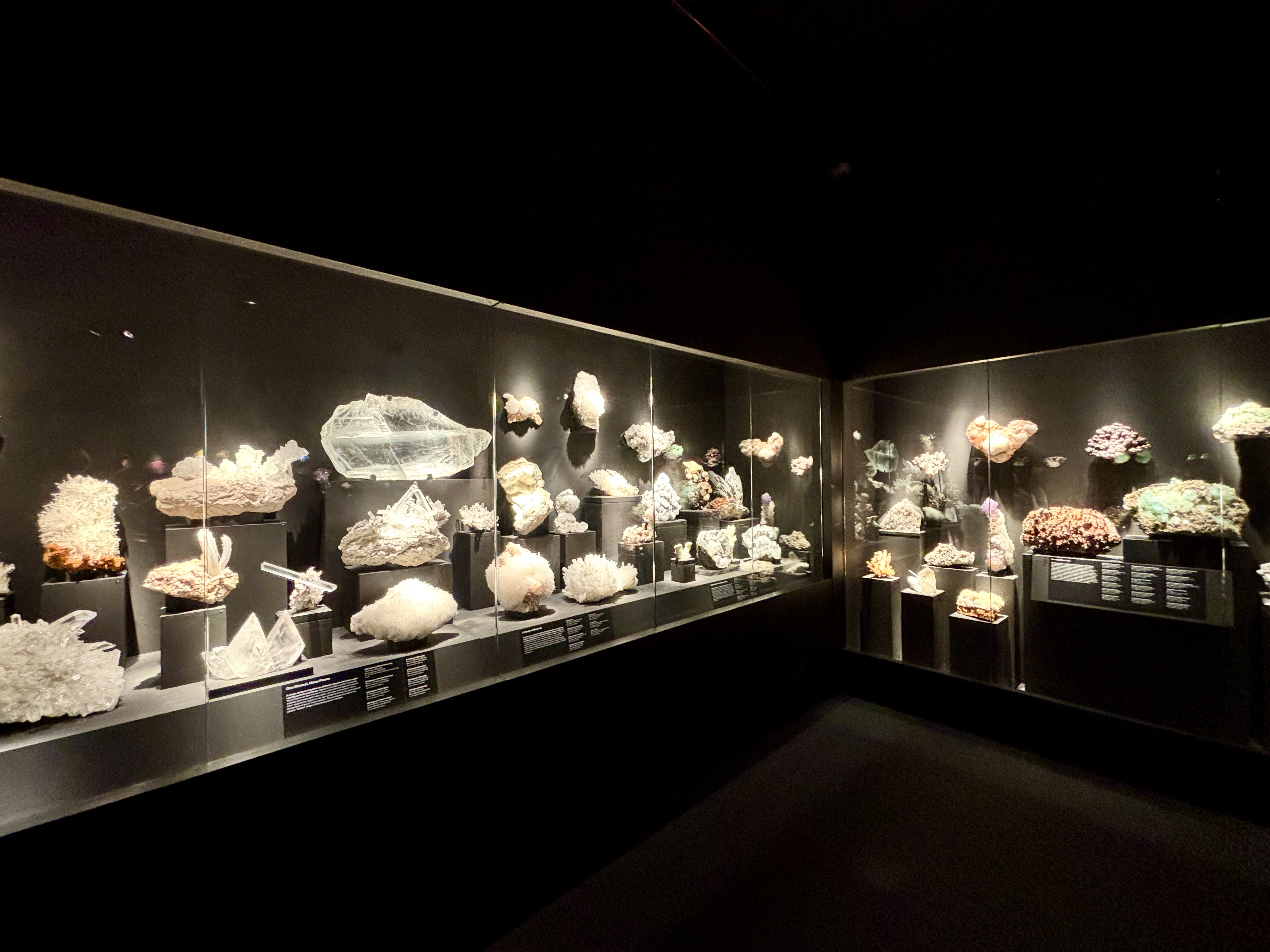
The mineral collection, displayed in darkened galleries with dramatic lighting, rounded out the visit. Crystals and specimens glowed in glass cases, their colors ranging from delicate whites to rich oranges and greens.
Final Thoughts
What struck me most was how The Bruce serves different visitors at once. Serious art scholarship sits alongside family-friendly science programs. The building lets you choose your own path through art or nature, meeting at key points.
For those of us in Fairfield County, The Bruce is an important anchor. In an area sometimes seen as just a suburb of New York, places like this remind us that real cultural life exists closer to home.
The Bruce Museum is at 1 Museum Drive in Greenwich, Connecticut. The museum is open Tuesday through Sunday, 10am to 5pm. Learn more about the Cos Cob Art Colony at the nearby Greenwich Historical Society.