
[MM Disclaimer: I used AI to help write this, and I’m proud of it: Antrhopic’s Claude AI for the text, and Google Gemini for the images]
I’ve been thinking a lot about artificial intelligence lately, which shouldn’t come as a surprise since it’s hard to avoid the topic these days. Every software update, every conference, every LinkedIn post seems to promise that AI is about to revolutionize everything. And maybe it will. But as an architect who spends his days working on real projects with real clients in real Connecticut towns with their real zoning boards, I thought it might be worth taking a moment to consider where AI actually fits into what we do right now, and where it might be headed.
Where We Are Today
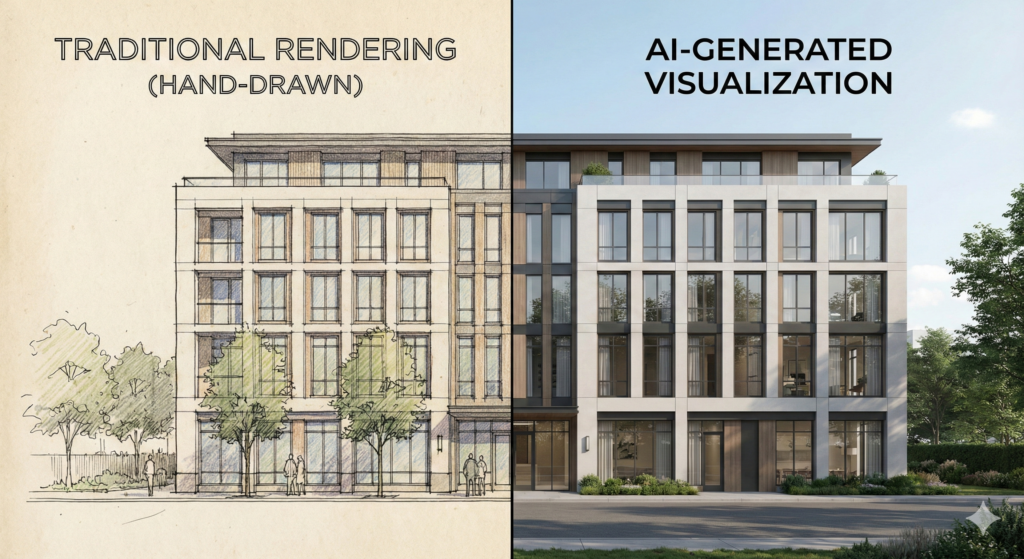
Let me be honest: AI’s current usefulness in architecture is pretty limited. The main application I’m seeing is in early stage visualizations. You can feed an AI tool some parameters and get back images that look like architectural renderings. Sometimes they’re impressive. Sometimes they’re useful for helping a client visualize a concept before we’ve invested hours in proper drawings. And sometimes they’re absolutely bizarre, with windows that defy physics and staircases that lead nowhere.
These tools can be fun to play with, and they can occasionally spark ideas or help communicate a general direction. But they’re a long way from replacing the work we do. They can’t tell you if your addition will require a variance. They don’t know that you’re in a historic district where the windows need to match the original house. They’ve never sat across from a planning and zoning commission trying to explain why a particular design solution makes sense for both the client and the neighborhood.

The reality is that architecture is about a lot more than creating pretty pictures. It’s about understanding how people actually live, how buildings come together, how to navigate building codes and zoning regulations, and how to solve the hundred small problems that come up during every project. AI isn’t there yet.
Where It’s Going
But here’s the thing: I don’t think it’s going to stay that limited forever.
Over time, I suspect AI will become another tool in the architect’s toolkit, similar to how CAD replaced hand drafting or how 3D modeling became standard practice. It won’t replace architects any more than those tools did, but it will change how we work.
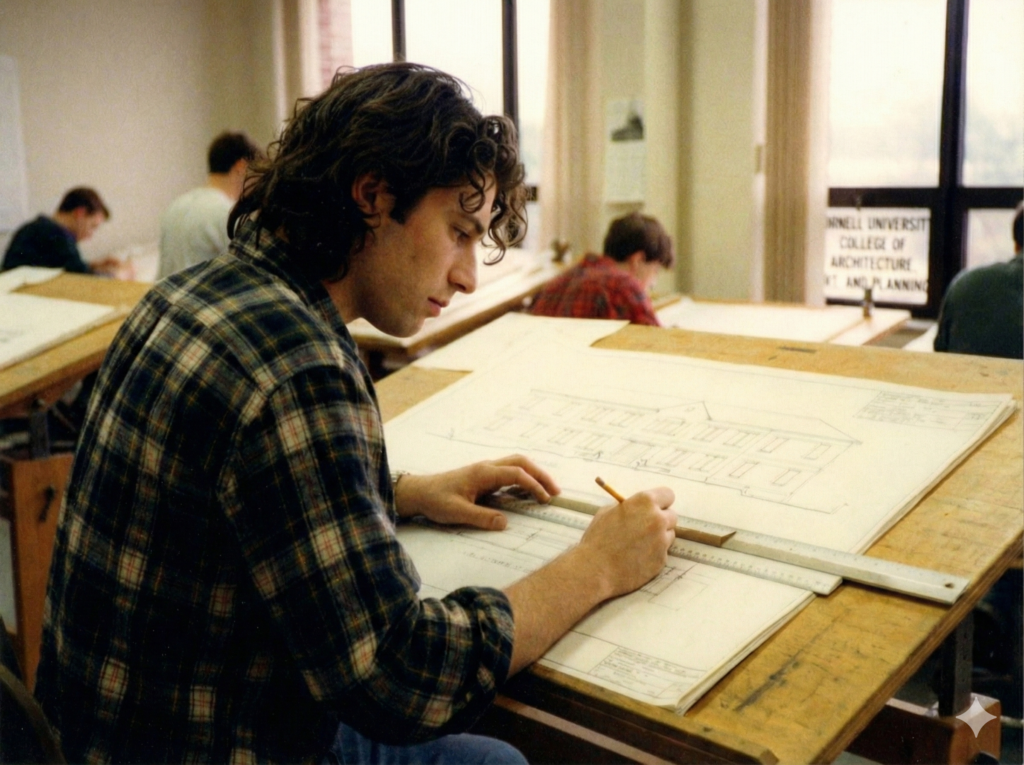
This actually reminds me of the transition to computer-aided drafting and design. When I was at Cornell, they didn’t allow us to use AutoCAD to produce drawings. Everything had to be done by hand. At the time, I suppose there was a belief that the discipline of hand drafting was essential to architectural education, or maybe a concern that computers would somehow diminish the craft. Looking back now, it seems a bit crazy. AutoCAD didn’t make architects obsolete. It just changed how we worked, mostly for the better. I suspect the move to AI will follow a similar path.
Imagine being able to quickly iterate through dozens of design options, testing different configurations for how a kitchen addition might connect to an existing house. Or having a tool that could instantly flag potential code issues before you’ve invested time in detailed drawings. Or generating multiple scheme options for a client meeting in the time it used to take to develop one.
The key word there is “iterate.” Architecture is fundamentally about iteration and refinement. You try an idea, you see what works and what doesn’t, you adjust, you try again. Right now, that process takes time. If AI can speed up certain parts of that process, particularly in the early conceptual phases, that could be genuinely valuable.
What Won’t Change
What I don’t think AI will do is replace the judgment, experience, and relationship building that’s at the heart of good architecture.
When a client comes to us, they’re not just looking for someone who can draw up plans. They’re looking for someone who can listen to how they actually use their space, understand what’s working and what isn’t, and translate that into thoughtful design solutions. They’re looking for someone who knows the local building officials and understands what will fly in their particular town. They’re looking for someone who can guide them through a complex, often stressful process.
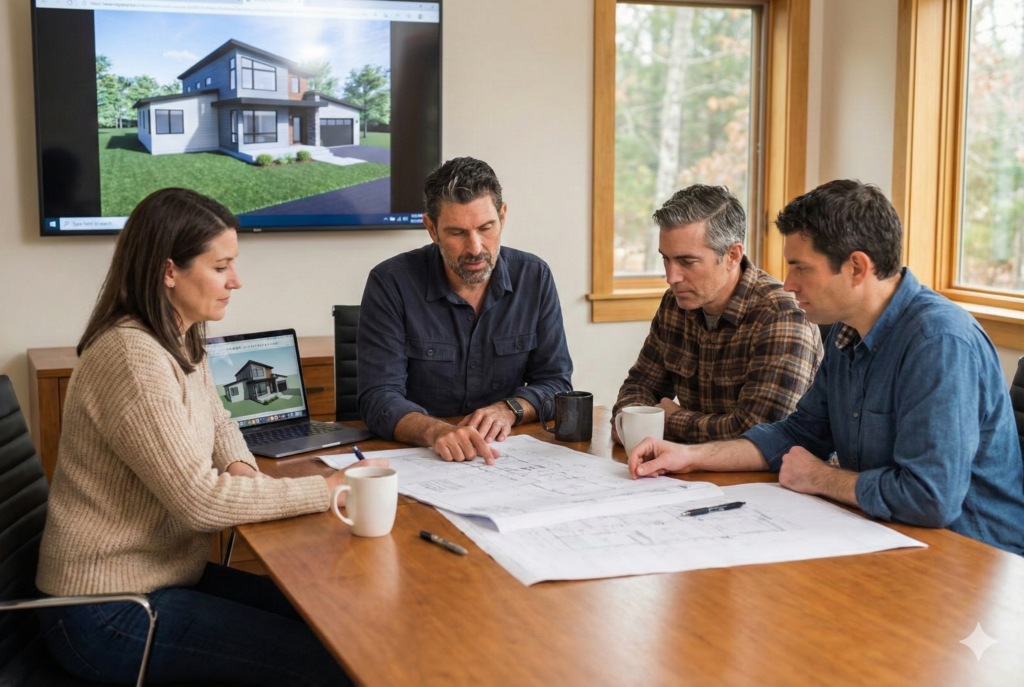
AI can’t do that. At least not yet, and I’d argue not ever in the same way a human architect can.
There’s also the fact that every project is unique. Every site has its own constraints and opportunities. Every client has their own needs and preferences. Every town has its own regulations and review processes. Architecture isn’t a one-size-fits-all endeavor, and the best solutions usually come from understanding the specific context in which you’re working.
A Balanced Perspective
I’ll admit, I’m watching these developments with a mix of interest and caution. Interest, because anything that can help us work more efficiently and explore ideas more quickly is worth paying attention to. Caution, because it’s easy to get swept up in hype about technology that isn’t quite ready for prime time.
For now, AI in architecture is more novelty than necessity. But I suspect that will change. The question isn’t whether AI will become part of how architects work, but rather how we’ll integrate it in ways that enhance rather than diminish what we do.
In the meantime, we’ll keep doing what we’ve always done: listening to clients, solving problems, navigating regulations, and creating spaces that connect people to the places they inhabit. And if AI can help us do any of that better or faster, we’ll be happy to add it to the toolbox.
Just don’t expect it to know why your zoning board cares so much about that stone wall.

– Mark